Miles as Medicine: How the Grand Tourer Became America's Most Effective Thinking Machine
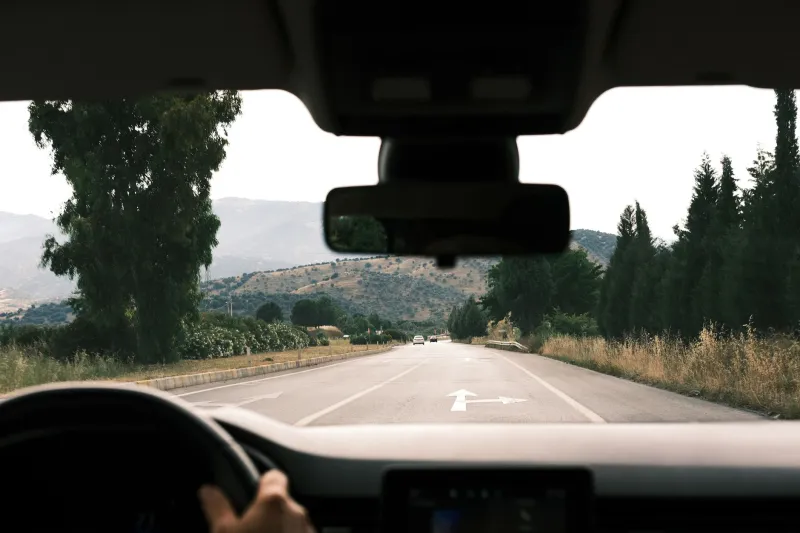
There is something that happens around the third hour of a properly executed highway run that no therapist's couch, no meditation app, and no corporate retreat has yet managed to replicate. The steering wheel settles into your palms. The engine note drops into its long-haul register. The white lines begin their hypnotic procession. And somewhere between the last exit you noticed and the next one you will, something loosens inside the mind that resists loosening anywhere else.
The grand tourer, it turns out, is not merely a conveyance. It is, for a significant number of serious owners, a precision instrument for arriving at the truth.
The Neurological Case for Long-Distance Driving
The psychological literature on what researchers sometimes call "incubation"—the phenomenon by which the subconscious mind solves problems that the conscious mind has been unable to crack—tends to identify repetitive, low-demand tasks as the most reliable triggers. Showering. Walking. Mowing the lawn. What the research has been slower to document, though practitioners have known it for decades, is that sustained highway driving in a properly engineered automobile occupies precisely the right cognitive bandwidth: enough to prevent the mind from wandering into anxious loops, too little to monopolize the deeper processing that leads to genuine insight.
The distinction between a true grand tourer and ordinary transportation matters enormously here. A car that demands nothing of its driver—one that corrects, anticipates, smooths, and automates—removes the very engagement that creates the meditative state. Equally, a car that demands everything, a track-focused machine on a technical road, offers no spare capacity for reflection. The grand tourer exists in the productive middle: a vehicle requiring the driver's continuous, modestly attentive participation while liberating the deeper mind to work.
Michael Hargrove, a 61-year-old civil engineer from Nashville who has owned three successive grand tourers over the past two decades, describes the phenomenon with a precision that would satisfy any research psychologist. "Every significant decision I've made since I was in my early forties—my second career, my move back to Tennessee, ending a business partnership that was costing me more than money—I can trace directly to a specific drive," he says. "Not to a conversation I had afterward, not to a night I slept on it. To the actual miles."
The Architecture of Clarity
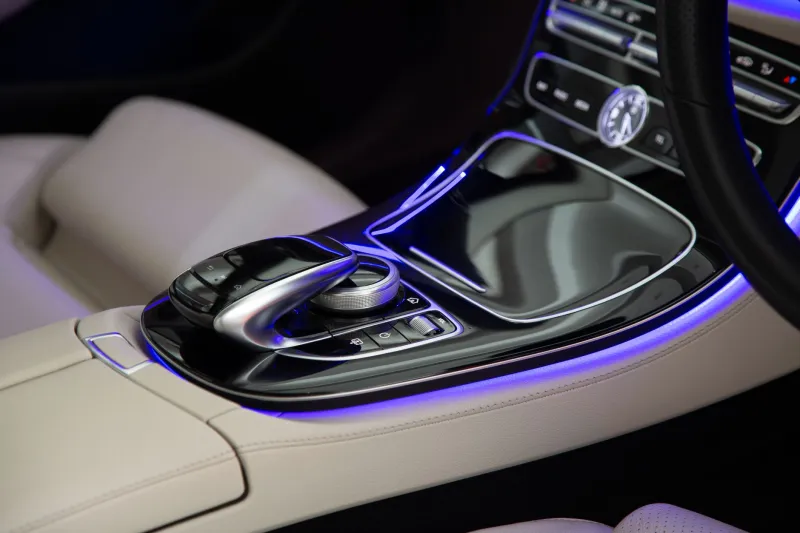
What separates the grand touring experience from a simple long commute is, in part, architectural. The cockpit of a serious grand tourer is designed to place the driver in a specific physical relationship with the road: low, centered, enveloped. The instrument cluster communicates without shouting. The seat holds without constraining. The sound insulation is calibrated—not to eliminate engine noise, which would sever the driver from the machine's emotional register, but to filter it into something that functions, over long distances, as a form of white noise that the mind can rest against.
This is not accidental. The engineers and designers who built the great grand tourers of the postwar era understood, perhaps intuitively, that their cars would be asked to carry their drivers through more than geography. The long-haul European GT tradition, transplanted to American highways by enthusiasts who recognized something essential in it, assumed that a car and driver would spend genuine time together—not the fractured, interrupted time of urban commuting, but sustained, unbroken hours.
Caroline Ellsworth, a 47-year-old attorney based in Atlanta who has driven her current grand tourer more than 80,000 miles over seven years, credits a single drive from Atlanta to the North Carolina coast with the decision to leave a large firm and establish her own practice. "I had been going back and forth for two years," she says. "I had spreadsheets. I had conversations with my husband, with mentors, with colleagues. And I could not get there. I left on a Friday morning and by the time I hit the South Carolina border I had already made the decision. I didn't even realize it until I stopped for fuel and called my husband."
She pauses before adding: "The car didn't tell me what to do. But it gave me somewhere to be while I figured it out."
The Route as Ritual
Serious grand touring owners speak frequently about the ritualistic quality of their longer drives, and this language is worth taking seriously rather than dismissing as romanticism. Ritual, in the anthropological sense, functions as a container for difficult cognitive and emotional work—it marks a transition from ordinary time into a different kind of attention. The process of preparing for a long drive, checking fluids, inspecting tires, selecting a route with intention, performs exactly this function. By the time the engine turns over, the driver has already signaled to themselves that something different is about to happen.
This is distinct from simply getting in a car and pointing it somewhere. The deliberateness that grand touring demands of its practitioners—route selection, timing, the choice of roads that reward attention rather than merely permitting velocity—creates a frame around the experience that amplifies its reflective qualities.
Robert Tanaka, a 55-year-old architect from Portland, Oregon, has developed what he describes without embarrassment as a personal protocol. "When I have something I genuinely need to think through, I plan a specific drive. Not a destination, exactly—a route. Something that will take me four or five hours and bring me back through roads I've chosen for a reason. I tell my family I'll be back by evening. And I go."
He has done this, by his count, eleven times in the past decade. Every time, he has returned with a decision made.
What the Car Knows
There is a temptation, when collecting these accounts, to romanticize the automobile itself—to suggest that something in the machine is doing the work. The owners who speak most thoughtfully about this experience resist that framing, even as they acknowledge something they struggle to articulate.
What they are describing, most precisely, is a partnership. The car provides the conditions: the pace, the physical engagement, the acoustic environment, the enforced disconnection from phones and screens and the ordinary demands of stationary life. The driver provides the mind and the unresolved questions. The road provides the time.
The grand tourer has always been, at its most essential, a machine for covering serious distances with seriousness of purpose. That its most devoted American owners have discovered in it something closer to a portable sanctuary than a mere vehicle is perhaps the most honest testament to what genuine engineering, in service of genuine travel, can produce.
The miles, it turns out, are doing exactly what they were always supposed to do. We simply forgot to notice.