The Fluid Dilemma: What You Pour Into a Classic Grand Tourer Says Everything About How You Understand Stewardship
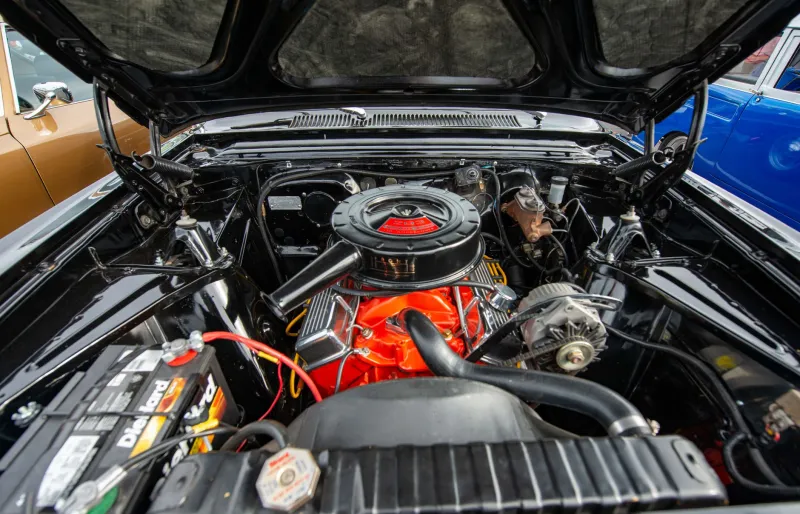
Open the service manual for a 1971 Ferrari 365 GTB/4 and the lubrication specifications read like dispatches from another civilization. Viscosity grades that no modern refinery produces as a primary product. Coolant formulations that have been superseded multiple times over. Gear oil specifications written for metallurgy that was already approaching obsolescence when the ink dried. The engineers who wrote those pages were working with the best available knowledge of their era, and they could not have anticipated that the machines they were specifying would still be in active service more than half a century later — or that the fluids they recommended would, in some cases, no longer exist in their original form.
This is the condition that confronts every serious owner of a classic grand tourer. It is not a simple problem, and it does not have a simple answer. What it has, instead, is a great deal of genuine complexity — mechanical, chemical, historical, and philosophical — that deserves more careful examination than it typically receives.
What the Chemistry Actually Changed
The shift from conventional mineral-based lubricants to modern synthetic formulations represents one of the more significant advances in automotive engineering of the past four decades. Full synthetic engine oils offer demonstrably superior film strength at operating temperature, substantially better performance at cold-start, and markedly improved resistance to thermal breakdown under sustained high-load conditions. For a grand tourer engine operating at elevated temperatures during extended highway cruising — precisely the conditions these cars were designed for — the theoretical advantages of synthetic lubrication are real and measurable.
The complications arise when modern chemistry encounters older engineering assumptions. Many classic grand tourer engines from the 1960s through the early 1980s were built with sealing materials — specifically certain neoprene and cork compounds — that were formulated in an era of mineral oil. Fully synthetic lubricants, particularly early-generation formulations, demonstrated a troubling tendency to permeate these compounds in ways that mineral oil did not. The result, in some cases, was weeping seals on engines that had previously been perfectly dry — a problem that created the widespread, if somewhat oversimplified, belief that synthetics and classic engines are fundamentally incompatible.
The reality, as with most things in the mechanical world, is more nuanced.
The Seal Question, Honestly Examined
Modern synthetic formulations have evolved considerably from the products that earned early skepticism among classic car owners. The ester-based and group IV synthetic products available today are substantially more compatible with period sealing materials than their predecessors, and many specialists who work exclusively on vintage grand tourers have quietly shifted their recommendations toward high-quality synthetic blends — not full synthetics in every application, but carefully selected products that offer meaningful protection advantages without the sealing compromises of earlier generations.
The honest position, which one encounters among the most experienced independent specialists, is that the original fluid specifications represent a floor, not a ceiling. They describe the minimum acceptable standard for an engine that was expected to be serviced regularly and operated within designed parameters. A classic Ferrari or Maserati or Aston Martin that is driven regularly — which is to say, a car that is actually being used as a grand tourer rather than stored as an investment — generates conditions that modern fluids are better equipped to manage than their period-correct equivalents.
There is also the matter of additive packages. Modern engine oils contain detergent and dispersant additives that keep combustion byproducts in suspension and prevent the formation of sludge deposits. Period-correct mineral oils of the 1960s and 1970s were comparatively primitive in this regard. An engine that has been maintained on period-correct fluids for decades may have accumulated deposits that a modern detergent oil will begin to mobilize — which can create its own set of problems if the transition is made abruptly in an engine with worn seals.
The Fuel Complication
The lubricant question is, in some respects, the more tractable half of the fluid dilemma. The fuel situation introduces complications that no amount of careful specification can fully resolve. Classic grand tourer engines designed for leaded premium gasoline — the standard formulation in the American market through the mid-1970s — operated with metallurgical assumptions about valve seat protection that modern unleaded fuel does not satisfy in the same way.
The practical consequence is well-documented: engines that were designed for leaded fuel and operated extensively on modern unleaded gasoline can experience accelerated valve seat wear, particularly under sustained high-load conditions. The solutions available — hardened valve seat inserts, lead substitute additives, careful attention to operating temperatures — each carry their own tradeoffs, and none of them fully replicates the original operating conditions.
Ethanol content in modern pump gasoline introduces additional considerations. E10 fuel, which is now essentially universal in the American market, is mildly corrosive to certain elastomers and fuel system components that were designed for pure hydrocarbon gasoline. For a classic grand tourer with original fuel lines, carburetor components, and tank sealing materials, this is not a hypothetical concern. It is a documented source of deterioration that responsible stewardship must address proactively.
What Stewardship Actually Means
The deeper question embedded in the fluid dilemma is one of philosophy rather than chemistry. What does it mean to properly care for a classic grand tourer? Does fidelity to original specifications honor the car's integrity, or does it subject a remarkable machine to conditions that its designers would have avoided if better alternatives had been available to them?
There is a romantic appeal to the period-correct position. Running a 1967 Lamborghini 400 GT on the lubricants its engineers specified, fueled by the closest available approximation of the gasoline for which it was tuned, represents a form of historical authenticity that has genuine value — particularly for cars that are preserved rather than actively driven.
For the grand tourer that is actually used as intended, however — driven on long American highways, pushed through mountain passes, asked to perform the function for which it was engineered — the argument for modern chemistry becomes considerably more persuasive. These engines were designed by engineers who cared deeply about their longevity. The most honest tribute to that engineering intention may be to protect it with the best available tools, regardless of when those tools were developed.
The fluid you choose is, ultimately, a statement about what kind of steward you intend to be. Neither answer is without merit. Both deserve more honest examination than the question usually receives.