The Honest Engine: In Defense of a Car That Drinks Deeply

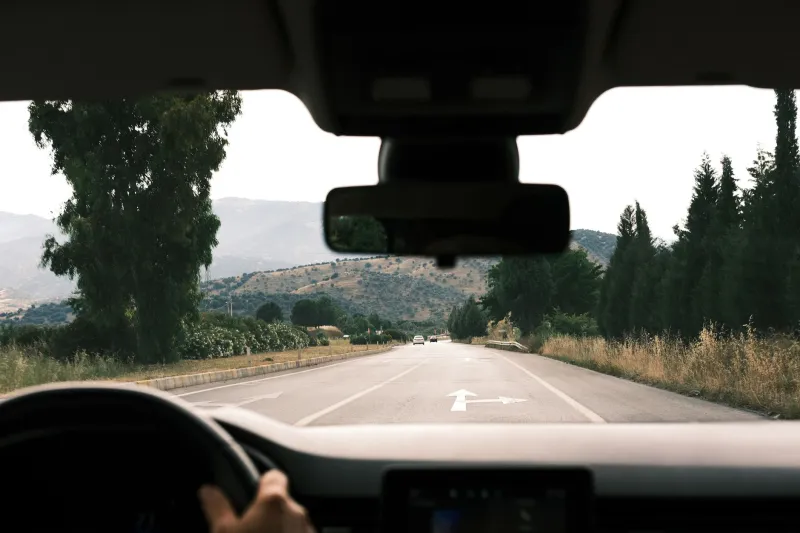
There is a particular moment that owners of serious grand tourers know well: the fuel stop. Not the anxious, range-anxiety-driven pull off the interstate that electric vehicle operators have been taught to plan around, but the deliberate, unhurried pause at a station somewhere in the American interior—Montana, perhaps, or the Texas Hill Country, or the long empty stretch between Flagstaff and Albuquerque—where you lift a nozzle, watch the gallons accumulate with a speed that would alarm an accountant, and feel, if you are honest with yourself, something uncomfortably close to satisfaction.
This feeling requires examination. Because in the current automotive conversation, dominated as it is by efficiency metrics, carbon calculations, and the relentless upward pressure of EPA ratings, the car that consumes fuel with genuine appetite has become a kind of moral problem. The argument of this piece is that this framing is wrong—and that in its wrongness, it has obscured one of the last genuinely unmanipulated indicators of what a performance machine actually is.
The Specification That Cannot Be Spun
Consider what has happened to performance specifications over the past two decades. Horsepower figures, once the primary language of automotive ambition, have become so inflated by optimistic testing conditions, so subject to the particular RPM ranges manufacturers choose to advertise, and so thoroughly detached from the real-world experience of driving that they function more as marketing shorthand than as meaningful engineering data. Zero-to-sixty times, measured under conditions of laboratory precision that no owner will ever replicate, tell you what a car can do in a straight line under ideal circumstances with a professional at the wheel. Lap times at the Nürburgring, that great theater of manufacturer credibility claims, are set by works drivers on prepared vehicles in conditions that bear no relationship to a Tuesday morning on the Blue Ridge Parkway.
Fuel consumption, by contrast, is extraordinarily difficult to falsify in practice. The EPA's testing methodology has its own well-documented limitations, and real-world figures routinely diverge from the window sticker. But here is the critical distinction: the divergence almost always runs in the direction of greater consumption, not less. The car that is rated at 16 miles per gallon in combined driving will, in the hands of an engaged driver on an interesting road, consume fuel at a rate that confirms and often exceeds that figure. The number has nowhere to hide.
A vehicle that drinks deeply does so because it has been engineered to prioritize something other than frugality. That something—the displacement, the compression ratio, the breathing characteristics of an engine built for response rather than economy—is precisely what makes it interesting to drive.
What Thirst Reveals
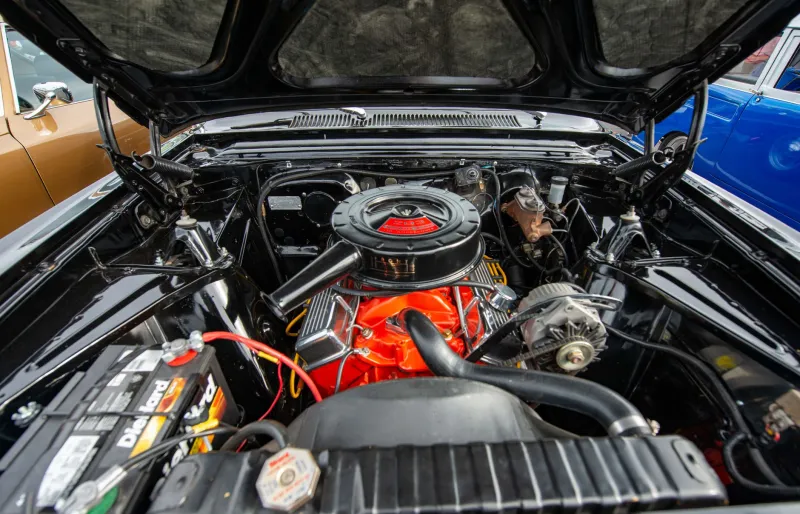
The fuel consumption figure of a genuine grand tourer is, in essence, a transparency report. It discloses the engineering priorities of the people who built the engine. A large-displacement naturally aspirated engine, breathing freely and developing torque across a wide range, will consume fuel in a manner that reflects its physical reality: it is moving a significant volume of air and fuel through a significant number of cylinders at a rate determined by physics, not by the preferences of a regulatory compliance department.
The turbocharged small-displacement engine, which has become the dominant architecture in modern performance vehicles, represents the opposite philosophy. It is an engine optimized, at least in part, for the EPA test cycle—for conditions of steady-state, moderate-load operation where its efficiency advantages are most pronounced. Under the kind of driving that grand touring actually involves—sustained high-speed cruising, aggressive on-ramp acceleration, the enthusiastic use of an empty two-lane through a mountain pass—the efficiency advantages of the small-displacement turbocharged unit tend to evaporate with considerable speed. Its real-world consumption, under real-world conditions, approaches and sometimes exceeds that of the larger engines it was designed to replace.
The difference is that the large-displacement engine never pretended otherwise. Its fuel consumption, at all times and under all conditions, is an honest statement of what it is. The downsized turbocharged alternative offers efficiency figures that are achievable only under conditions that no serious driver will consistently maintain. One of these is transparent. The other is not.
The Cultural Problem with Efficiency Obsession
The elevation of fuel efficiency as the primary metric by which automotive virtue is judged reflects a broader cultural anxiety that is worth naming directly. Americans have, over the past fifteen years, been encouraged to experience fuel consumption as a form of personal moral exposure—to feel that a car's thirst is a confession of irresponsibility rather than a statement of engineering priorities. This framing serves certain interests very well. It does not serve the interests of people who care about what driving actually feels like.
The grand touring tradition, rooted in the postwar European philosophy of covering serious distances with serious machinery, has never been a tradition of parsimony. The great GTs of the 1960s, the cars that established the aesthetic and philosophical template that their modern descendants attempt to honor, were not fuel-efficient. They were not designed to be. They were designed to sustain high speeds across long distances with a quality of engagement and mechanical honesty that their drivers could feel and trust.
That tradition is not incompatible with environmental consciousness, properly understood. A grand tourer driven with genuine intention—taken out for a meaningful journey rather than idled through stop-and-go commuting for which it was never designed—represents a fundamentally different relationship with fuel than the aggregate statistics suggest. The miles it consumes most thirstily are the miles most worth consuming.
Reading the Gauge as a Driver
There is a discipline to driving a car that drinks deeply, and it is a discipline that improves the driver. You learn to read a route in terms of fuel availability. You develop an awareness of range that drivers of more frugal vehicles rarely cultivate. You stop at stations with a frequency that forces small pauses into long drives—pauses that the grand touring tradition has always recognized as part of the rhythm of serious travel.
More significantly, the fuel gauge of a grand tourer in active use tells you something true about how you have been driving. A long mountain run that has depleted the tank faster than expected is not a rebuke. It is a record. It says: you used this machine as it was designed to be used. You asked something of it, and it answered.
In a world of optimized specifications and carefully managed impressions, that kind of honesty has become genuinely rare. The car that drinks deeply is, among other things, a car that tells the truth. In the current climate, that distinction is worth considerably more than the fuel it costs.