America's Infinite Horizon: Why the Open Road Remains the Purest Expression of Grand Touring
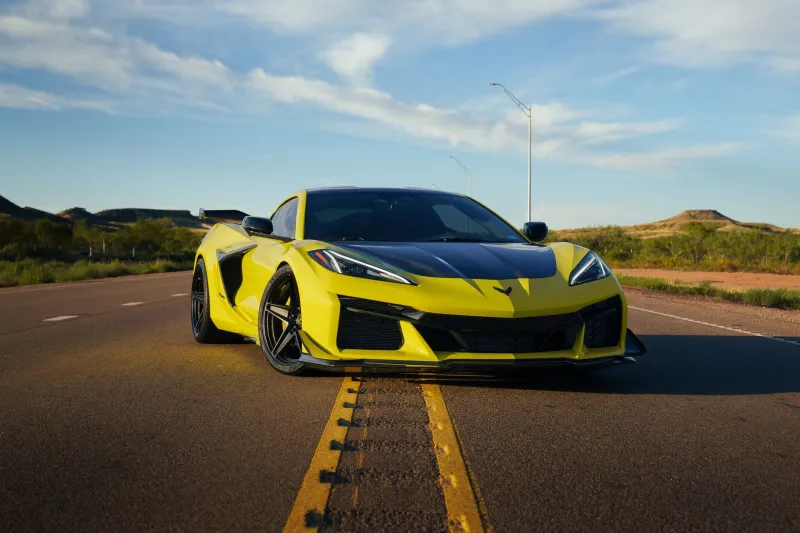
There is a particular kind of silence that settles over a driver somewhere past the Oklahoma panhandle, long after the city has dissolved in the rearview mirror and before the next significant skyline appears on the horizon. The engine note holds steady. The road unspools with democratic indifference. And for a moment — perhaps the most honest moment available to any person of means in contemporary American life — there is nothing to do but be exactly where you are.
This is the condition that grand touring was always meant to produce. Not speed records. Not social media documentation. Not the bragging rights of a difficult reservation secured. Simply the irreplaceable experience of moving through the world at a pace that permits genuine observation, aboard a machine engineered to make the act of travel itself a form of pleasure.
America, it turns out, remains extraordinarily well-suited to this pursuit — perhaps better suited than anywhere else on earth.
The Continent as Canvas
Europe gave grand touring its name and its original mythology. The young aristocrats who crossed the Alps in the seventeenth and eighteenth centuries were not rushing to arrive; they were, in the most literal sense, being educated by the journey. The road was the curriculum. The discomfort, the delay, the unexpected encounter — these were not obstacles to the experience. They were the experience.
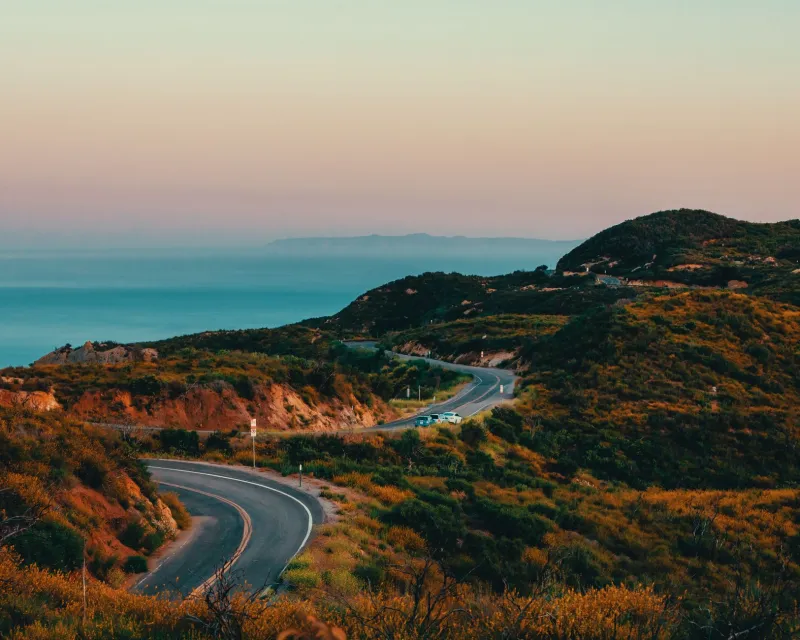
America inherited this spirit and scaled it to continental proportions. A drive from coastal Maine to the high deserts of New Mexico traverses more distinct climates, geological epochs, and cultural zones than most European grand tours ever encountered. The Blue Ridge Parkway alone — 469 miles of unhurried elevation through the southern Appalachians — demands the kind of attentive, unhurried motoring that the grand touring automobile was designed to reward. The stretch of US-50 across Nevada, often called the loneliest road in America, offers something rarer still: the sensation of genuine solitude, which has become among the most coveted luxuries of the twenty-first century.
What these roads require, and what they reveal, is a driver willing to relinquish the destination as the primary objective.
The Tyranny of Arrival
Modern travel culture has become almost entirely destination-obsessed. The flight is an inconvenience to be endured. The drive is something to be shortened. The journey itself — the transitional space between departure and arrival — is widely regarded as dead time, to be filled with podcasts, conference calls, and navigation apps issuing authoritative commands.
The grand touring philosophy stands in direct opposition to this framework. It insists, with considerable historical authority, that the manner of travel is inseparable from the quality of the experience. A Ferrari Roma crossing the Rockies on US-40 is not simply a faster version of flying into Denver. It is a categorically different engagement with the American landscape — one that rewards the driver with a physical and sensory understanding of the terrain that no other mode of transit can approximate.
Wealthy enthusiasts are rediscovering this distinction with something approaching urgency. In conversations with collectors and long-distance drivers across the country, a common theme emerges: the road trip in a genuinely capable grand tourer has become a form of deliberate withdrawal from the connected, optimized, perpetually-monitored texture of contemporary professional life. The car becomes a room with no Wi-Fi and no agenda. The miles become a form of meditation.
What the Machine Contributes
Not every automobile is suited to this purpose, and the distinction matters enormously. The grand tourer — properly understood — is not a sports car pressed into reluctant service on a long journey, nor is it a luxury sedan that happens to possess adequate power. It occupies a specific philosophical position: a machine that is genuinely pleasurable to operate at legal highway speeds for extended periods, that insulates its occupants from fatigue without insulating them from the sensory experience of the road, and that rewards sustained attention rather than demanding it as a condition of survival.
The Bentley Continental GT crossing the Texas Hill Country at dusk. A well-sorted Porsche 911 Touring threading through the curves of the Pacific Coast Highway north of Malibu. A Aston Martin DB12 absorbing the long, rhythmic undulations of a Montana two-lane at the edge of the speed limit. These are not exercises in excess. They are, in the most precise sense, the machines doing what they were designed to do — and doing it in a landscape that deserves exactly this quality of attention.
The American road trip, conducted in this spirit and in this kind of vehicle, is not a nostalgic recreation of something lost. It is an active, ongoing argument that the journey retains its primacy — that arrival, however comfortable, is only ever the end of the interesting part.
The Route as Narrative
What separates a grand tour from a commute, or even from a well-planned vacation drive, is the quality of intentionality brought to the route itself. The great American road-trip itineraries reward careful study. US-89 from Flagstaff through the Navajo Nation to the southern entrance of Grand Teton National Park is among the most geographically dramatic sequences of asphalt on the continent. The Cherohala Skyway in Tennessee and North Carolina offers elevation changes and corner sequences that would be celebrated anywhere in the world. The stretch of California State Route 1 between Cambria and Carmel remains, after decades of familiarity, genuinely extraordinary.
Choosing these routes over the interstate alternative is itself an act of grand touring philosophy. It is a declaration that the hour saved on the freeway is worth less than the hour spent properly. It is, in the language of the road, a statement of values.
The Journey That Justifies Everything
There is a persuasive argument to be made that the American road trip, conducted in a thoughtfully chosen grand tourer along a deliberately selected route, represents something close to the highest expression of automotive culture available to the contemporary enthusiast. It requires a fine machine. It rewards genuine driving skill. It demands patience and curiosity in equal measure. And it produces the kind of experience — accumulated, irrepeatable, genuinely personal — that no concours result or lap time can replicate.
The grand tour never truly ended. It simply moved west, spread across a continent, and waited for drivers willing to rediscover that the road, not the destination, has always been the point.