Vanishing Lines: The Slow Erasure of America's Great Grand Touring Roads
There is a particular kind of grief that arrives slowly, almost imperceptibly, the way a favorite road deteriorates — one pothole, one strip mall, one toll plaza at a time. Ask any serious grand touring enthusiast about their most cherished American drive from a decade ago, and you will hear the same quiet resignation in their voice. The road is still there, technically. But the experience — that rare, uninterrupted communion between a fine machine and a stretch of authentic open pavement — has been quietly, systematically dismantled.
This is not a lament born of nostalgia alone. It is a documented erosion, and its consequences reach far beyond the inconvenience of a heavier traffic count or a new interchange. What is disappearing is the physical infrastructure of a culture — the very roads upon which the grand touring ideal was built, tested, and refined across generations of American driving.
The Roads That Made Us
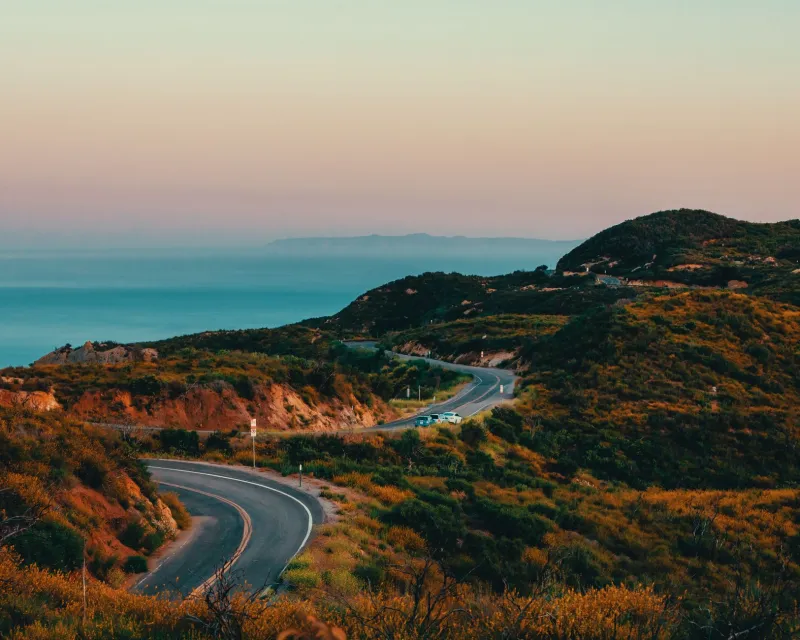
Grand touring, in its purest American expression, was never simply about the machine. It was always about the relationship between the machine and the landscape. The Pacific Coast Highway threading through Big Sur. US Route 129 — the Dragon — coiling through the Appalachian borderlands of North Carolina and Tennessee. The two-lane ribbons of Montana's Beartooth Highway, where the horizon stretches so far that even the most powerful engine feels appropriately humbled.
These routes were not merely scenic. They were demanding in exactly the right measure — roads that rewarded a driver who understood their car, who balanced commitment with restraint, who read the surface and responded with precision. They were, in every meaningful sense, the classrooms of grand touring culture.
What has happened to them varies by region, but the patterns are consistent and discouraging.
The Toll Road Problem
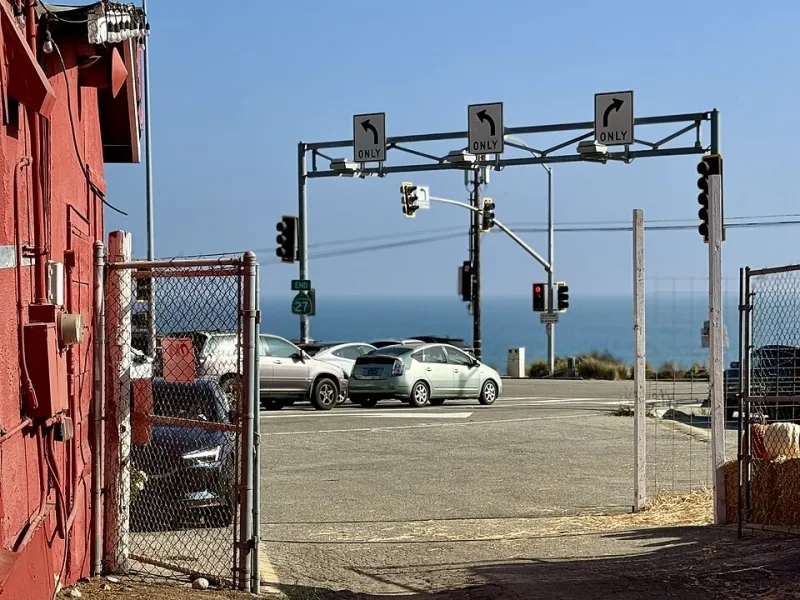
Across the eastern seaboard and much of the Midwest, the creeping expansion of toll infrastructure has fundamentally altered the character of long-distance driving. What were once fluid, uninterrupted journeys now arrive punctuated by mandatory deceleration, electronic surveillance, and the bureaucratic friction of transponder systems that vary — and often conflict — from state to state.
The issue is not merely financial. It is rhythmic. Grand touring demands a particular cadence, an unbroken flow of attention and response between driver and road. Every toll booth, every mandatory slow zone, every gantry bristling with cameras represents a forced interruption of that cadence. The journey becomes transactional rather than experiential.
"There used to be a stretch I'd drive every autumn, down through the Shenandoah Valley and into the Virginia piedmont," says one long-time enthusiast who has covered more than 200,000 miles in grand touring vehicles over the past two decades. "It took about three years for the toll expansion to make it feel like driving through an airport. The road itself hasn't changed. Everything around it has."
Commercial Sprawl and the Death of the Approach
Beyond toll infrastructure, commercial development has consumed something perhaps even more valuable: the approach. The long, unhurried entry into a great drive — the gradual shedding of urban noise, the moment the road narrows and the landscape asserts itself — is increasingly lost to the advancing edge of exurban expansion.
Route 66 is the most cited example, though its mythology has always outpaced its reality. The more instructive case studies are quieter. Sections of US 50 through Nevada — once so genuinely remote that it earned the designation "America's Loneliest Road" — now contend with the encroaching footprint of logistics corridors serving the western distribution economy. The loneliness is diminishing, and with it, the particular freedom that made those miles extraordinary.
In California, stretches of Highway 1 south of Monterey that once offered near-solitary passage now require advance planning, timed-entry reservations during peak seasons, and a tolerance for convoy-style driving that strips the experience of any spontaneity. The road remains beautiful. The grand touring experience it once offered is largely gone.
What Remains — And Why It Matters
The news is not uniformly bleak. Portions of the American road network retain genuine grand touring character, though accessing them increasingly requires both knowledge and deliberate effort.
The Tail of the Dragon remains a legitimate test of car and driver, though its fame has made solitary passage nearly impossible on weekends between April and October. The Beartooth Highway, by virtue of its altitude and seasonal closure, maintains a degree of authentic remoteness. Sections of US 191 through Wyoming and Montana reward those willing to plan around the rhythms of ranching and agriculture that still govern the surrounding landscape.
In the Southeast, the back roads of the North Carolina mountains — particularly those that branch away from the Dragon's most-photographed curves — offer stretches of genuine quality. They demand local knowledge, a detailed map, and the patience to explore rather than simply arrive.
The common thread among these surviving routes is a degree of inconvenience that, paradoxically, has protected them. The roads that are difficult to find, seasonally inaccessible, or simply too far removed from major population centers to attract casual traffic have retained what the accessible routes have lost.
The Preservation Question
What can actually be done? The honest answer is that the forces erasing these roads — economic development pressure, infrastructure investment priorities, population growth — are not easily redirected. No advocacy organization exists with sufficient political weight to preserve the character of a two-lane state highway against the competing demands of a growing economy.
What enthusiasts can do, however, is document, share selectively, and drive deliberately. There is a reasonable argument that some of the most valuable remaining grand touring routes are best protected by a degree of quiet obscurity — that the social media impulse to broadcast every exceptional discovery is, in the long run, counterproductive to the preservation of the experience itself.
Beyond individual discretion, there is a stronger case for engagement with state and regional transportation planning processes. Several states have formal scenic byway designation programs that offer some degree of protection against the most aggressive forms of commercial encroachment. These programs are chronically underfunded and politically fragile, but they represent the most direct available mechanism for preserving road character at the policy level.
A Different Kind of Urgency
Grand touring has always been defined by its relationship with time — the long mile, the patient approach, the understanding that the journey itself is the point. There is a certain irony in the fact that the greatest threat to that tradition is not a lack of enthusiasm, but a lack of urgency about preservation.
The roads that shaped this culture are not infinite. They are finite, physical things, subject to the same pressures that transform every other aspect of the American landscape. Some of them are already gone in any meaningful sense. Others are in the process of being lost.
The grand tourers who remain serious about the craft owe it to the tradition — and to those who will follow — to drive these roads now, to know them deeply, and to fight for what remains of them with the same commitment they bring to every other aspect of the pursuit.
The machine deserves roads worthy of it. So does the driver. And both deserve better than the slow, indifferent erasure currently underway.