The Grand American Drive: Seven Routes That Every Serious Enthusiast Needs to Experience Behind the Wheel
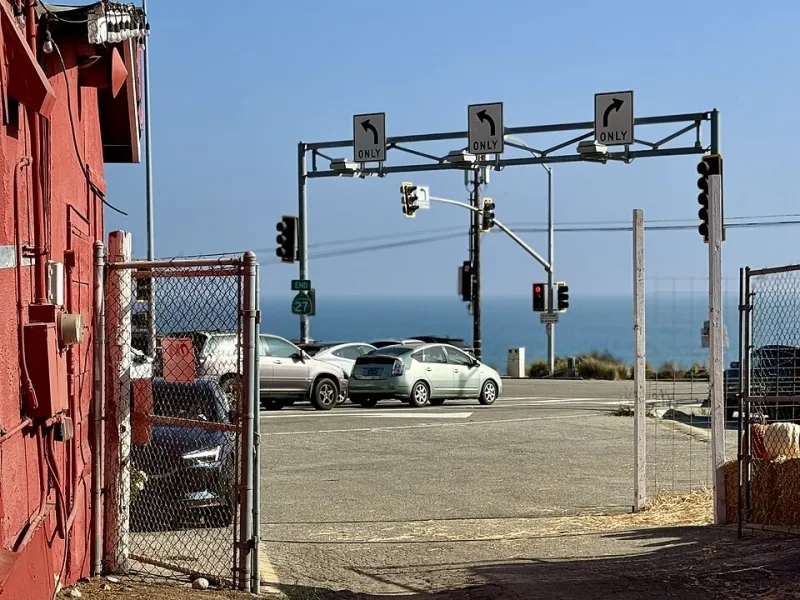
Photo: CaliforniaFoghorn, CC BY 4.0, via Wikimedia Commons
Europe has its Stelvio Pass and its Col de Turini. Japan has its Hakone Turnpike. But the United States, frequently underestimated as a driving destination by enthusiasts conditioned to look abroad, possesses a road network of staggering variety and ambition. From the fog-draped cliffs of the California coast to the cathedral hardwood corridors of the Appalachians, America offers grand touring experiences that rival anything the old world can produce — provided one knows where to point the car.
What follows is not a list of the fastest roads or the most technically demanding circuits. It is a curated selection of routes chosen for the totality of the experience they deliver: the quality of the pavement, the character of the landscape, the elevation changes, the technical challenges, and the destinations that make the journey worth planning. These are roads for drivers who understand that the point of a great car is not merely to own it, but to use it as it was intended.
1. Pacific Coast Highway — California's Coastal Masterwork
Route: San Francisco to Los Angeles via Highway 1 | Distance: Approximately 600 miles | Estimated Drive Time: Two to three days at a measured pace
No road in America carries more mythological weight than California State Route 1, and few roads in the world justify their reputation so completely. The stretch between San Francisco and Los Angeles — particularly the 90-mile central section through Big Sur — presents a driving experience of near-operatic intensity. The road clings to cliff faces hundreds of feet above the Pacific, executing a continuous series of sweeping curves and elevation transitions that demand both mechanical capability and driver concentration.
Technical Character: The Big Sur section features sustained curves with significant elevation change, crests that compress suspensions unexpectedly, and surface conditions that vary with weather and season. The road rewards smooth, deliberate inputs rather than aggressive driving — this is a route for savoring, not attacking.
Elevation Profile: Sea level throughout, with constant undulation as the road negotiates coastal ridgelines. Individual crests rarely exceed 1,000 feet, but the cumulative vertical movement is substantial.
Nearby Destinations: The Petersen Automotive Museum in Los Angeles provides a worthy conclusion to the southbound journey, while the Monterey Peninsula — home to the Pebble Beach Concours d'Elegance — offers a natural northern staging point for enthusiasts.
Ideal Vehicles: The PCH rewards grand tourers with sophisticated adaptive suspension — the Porsche 911 Carrera, the Cadillac CT5-V Blackwing, or a well-sorted Corvette Stingray. Vehicles with adjustable damping that can be softened for comfort on the rougher northern sections while firming up through Big Sur's more consistent pavement will provide the most satisfying experience.
2. Blue Ridge Parkway — America's Finest Linear Park
Route: Shenandoah National Park, Virginia, to Cherokee, North Carolina | Distance: 469 miles | Estimated Drive Time: Two to three days
Designed during the New Deal era as a scenic motor road connecting two national parks, the Blue Ridge Parkway has matured into one of America's most beloved driving destinations. Unlike most public roads, it was engineered specifically for the pleasure of the drive — its curves are intentional, its overlooks are carefully positioned, and commercial traffic is prohibited along its entire length.
Technical Character: The Parkway's 45 mph speed limit is not a suggestion to be negotiated — it is enforced, and the road's design philosophy reflects it. The pleasure here lies in precision and flow rather than speed: late-apex cornering on perfectly cambered curves, the management of gentle crests, and the sustained concentration required to maintain smoothness across 469 miles of continuous engagement.
Elevation Profile: The road traverses the spine of the Appalachian Mountains, with elevations ranging from approximately 650 feet near the Virginia terminus to over 6,000 feet near Richland Balsam in North Carolina. The highest section, near Milepost 431, offers dramatic panoramas and noticeably cooler temperatures even in summer.
Nearby Destinations: The National Corvette Museum in Bowling Green, Kentucky, is a worthwhile detour for enthusiasts completing the southern section, while Asheville, North Carolina, provides exceptional accommodations and dining for those seeking a refined base of operations.
Ideal Vehicles: The Parkway's smooth pavement and moderate speeds make it extraordinarily accessible. A Lexus LC 500, a BMW M4 Competition, or a Ford Mustang GT500 will each perform brilliantly here — the key attribute is a chassis that communicates road texture and rewards driver input at legal velocities.
3. Tail of the Dragon — 318 Curves in 11 Miles
Route: Deals Gap, North Carolina to Tennessee | Distance: 11 miles | Estimated Drive Time: 20 minutes to one hour, depending on pace and traffic
US Route 129 at Deals Gap requires no elaborate introduction among serious driving enthusiasts. The Tail of the Dragon is the most technically demanding public road in the United States — a relentless succession of 318 curves compressed into 11 miles of western North Carolina mountain road, with no intersecting driveways or side streets to interrupt the rhythm.
Technical Character: Tight, technical corners with limited sight lines and significant elevation change characterize the Dragon. The road rewards experience and mechanical sympathy rather than raw horsepower — a well-driven Mazda MX-5 will humble poorly driven supercars here. Braking points and corner entry speeds are critical; the consequences of miscalculation are immediate and unforgiving.
Elevation Profile: The road descends approximately 1,000 feet from the Tennessee side to the North Carolina terminus, with the grade and directional changes distributed across the full 11 miles.
Nearby Destinations: The Crossroads of Time resort and the Tail of the Dragon photography operation at Tree of Shame are established enthusiast gathering points. The broader Cherohala Skyway, located nearby, provides a magnificent complement — wider, faster, and equally spectacular.
Ideal Vehicles: Lightweight, nimble platforms excel here. The Porsche Cayman GT4, the Lotus Emira, or the Chevrolet Corvette Z06 reward the driver willing to explore their capabilities methodically. All-wheel-drive systems can mask the road's feedback; rear-wheel-drive configurations with limited-slip differentials generally provide the most communicative experience.
4. Going-to-the-Sun Road — Montana's Alpine Masterpiece
Route: West Glacier to St. Mary, Glacier National Park, Montana | Distance: 50 miles | Estimated Drive Time: Two to three hours
Constructed between 1921 and 1932 and designated a National Historic Landmark, Going-to-the-Sun Road traverses the Continental Divide through terrain that would challenge a mountain goat. Vehicle length and width restrictions apply — nothing over 21 feet in length or 8 feet in width is permitted — which conveniently excludes most large SUVs and ensures the road retains its intimate, purposeful character.
Technical Character: The road's most demanding section climbs from Lake McDonald to Logan Pass at 6,646 feet via a series of switchbacks and narrow cliff-side traverses. The pavement is generally excellent but narrow, and the absence of guardrails in certain sections focuses the mind considerably.
Elevation Profile: The road climbs from approximately 3,200 feet at West Glacier to 6,646 feet at Logan Pass before descending to 4,500 feet at St. Mary — a total elevation change of over 3,400 feet across 50 miles.
Nearby Destinations: The Glacier Park Lodge and the Prince of Wales Hotel (just across the Canadian border in Waterton Lakes National Park) provide accommodations appropriate to the journey's grandeur.
Ideal Vehicles: The road's narrow width and restricted vehicle dimensions favor compact sports cars and smaller grand tourers. A Porsche 911, an Alfa Romeo Giulia Quadrifoglio, or a BMW M3 will navigate the road with appropriate agility while providing the performance to make the ascent genuinely engaging.
5. Texas Hill Country Loop — The Lone Star State's Best-Kept Secret
Route: Austin to Fredericksburg, Kerrville, and return via FM 337 | Distance: Approximately 250 miles | Estimated Drive Time: One full day
Farm-to-Market Road 337 between Leakey and Medina is known among Texas driving enthusiasts as simply "The Twisted Sisters" — a designation that understates the road's technical complexity and overstates its notoriety outside the state's borders. Combined with the broader Hill Country loop through Fredericksburg and the Llano Uplift, it constitutes one of America's most underappreciated grand touring circuits.
Technical Character: FM 337 offers rapid direction changes, significant elevation variation for a region perceived as flat, and pavement quality that ranges from excellent to demanding. The broader loop's FM roads are lightly trafficked and reward sustained, committed driving.
Elevation Profile: The Hill Country's terrain rises from approximately 600 feet near Austin to over 2,400 feet in the higher ranch country, with the elevation change distributed across sweeping grades rather than abrupt climbs.
Nearby Destinations: Fredericksburg's Main Street offers exceptional dining and accommodation, while the National Museum of the Pacific War provides cultural context for a longer stay. The Driftwood Estate Winery and several notable barbecue institutions in Lockhart reward a more leisurely itinerary.
Ideal Vehicles: The Hill Country's long, flowing sections favor grand tourers with strong straight-line performance and comfortable high-speed cruising ability. The Chevrolet Corvette, the Ford Mustang GT500, or the Dodge Charger Daytona EV are all well-matched to the route's character.
6. Beartooth Highway — The Road That Ansel Adams Would Have Driven
Route: Red Lodge, Montana to Cooke City, Montana | Distance: 68 miles | Estimated Drive Time: Two to three hours
Charles Kuralt called it "the most beautiful road in America," and while that designation invites legitimate debate, the Beartooth Highway's credentials are formidable. The road climbs to 10,947 feet at Beartooth Pass — the highest elevation of any US highway in the Rocky Mountain region — through terrain of austere, elemental magnificence.
Technical Character: The ascent from Red Lodge involves a series of dramatic switchbacks that gain 5,000 feet of elevation in approximately 10 miles. The plateau section near the summit traverses high alpine tundra on a road that can receive snow in any month of the year. The descent toward Cooke City is more gradual but no less spectacular.
Elevation Profile: From 5,555 feet in Red Lodge to 10,947 feet at the summit — an elevation gain of 5,392 feet over roughly 30 miles of climbing.
Nearby Destinations: Yellowstone National Park's northeast entrance at Cooke City provides a natural extension of the journey, while the Pollard Hotel in Red Lodge offers historic accommodations appropriate to the route's grandeur.
Ideal Vehicles: High-altitude operation slightly reduces naturally aspirated engine output, making turbocharged platforms particularly well-suited to the Beartooth. The Porsche Panamera Turbo, the BMW M5, or the Cadillac CT5-V Blackwing will manage the altitude with minimal performance compromise while providing the all-weather capability that mountain conditions occasionally demand.
7. The Extraterrestrial Highway — Nevada's High-Speed Corridor
Route: Nevada State Route 375, Rachel to Warm Springs | Distance: 98 miles | Estimated Drive Time: One to two hours
State Route 375 — officially designated the Extraterrestrial Highway in 1996 — is included here not for its technical demands, which are minimal, but for the singular experience it provides: 98 miles of arrow-straight Nevada desert highway, almost entirely devoid of traffic, with sight lines extending to the horizon in every direction. It is the American open road distilled to its purest essence.
Technical Character: Essentially none. The road is flat, straight, and undemanding. Its purpose is not to test the driver but to liberate the vehicle — to provide the conditions under which a high-performance grand tourer can demonstrate its sustained high-speed composure without interference.
Elevation Profile: Relatively constant at approximately 4,800 to 5,200 feet above sea level, with minimal variation across the route's length.
Nearby Destinations: The Little A'Le'Inn in Rachel provides an appropriately eccentric waypoint, while Las Vegas — approximately 150 miles to the south — offers every conceivable form of recovery from the journey's exertions.
Ideal Vehicles: This is the domain of the true grand tourer in its classical sense — a vehicle that achieves effortless, sustained velocity while maintaining complete composure. The Bentley Continental GT, the Mercedes-AMG GT 63, or the Aston Martin DB12 are precisely the machines for which this road exists.
Planning Your Grand Tour
Each of these routes rewards preparation proportional to the experience it delivers. Seasonal considerations are paramount — the Beartooth Highway and Going-to-the-Sun Road are typically accessible only from late May through October, while the Blue Ridge Parkway reaches its visual peak during the autumn foliage season in late September and October. Pacific Coast Highway fog is most prevalent in June and July, a phenomenon local meteorologists call "June Gloom" that can significantly reduce visibility in the Big Sur section.
Vehicle preparation matters equally. Tire condition, brake health, and fluid levels deserve careful attention before any of these routes. The Tail of the Dragon, in particular, has a well-documented history of punishing under-prepared vehicles and overconfident drivers with equal impartiality.
The open road, ultimately, rewards those who approach it with respect — for the machine, for the environment, and for the privilege of driving roads this magnificent. Point the car toward the horizon, and drive.