The Empty Seat: On the Navigator Who Shaped Grand Touring and the Technology That Made Them Unnecessary
In the spring of 1955, Stirling Moss and Denis Jenkinson completed the Mille Miglia in ten hours, seven minutes, and forty-eight seconds — a record that has never been broken and, given the race's subsequent cancellation following a catastrophic accident the following year, never will be. The achievement belongs, in popular memory, almost entirely to Moss. The Mercedes-Benz 300 SLR bears his name in the historical record. The photographs show him at the wheel, visor down, expression fixed in that particular mask of absolute concentration that only elite racing drivers have ever worn convincingly.
But Jenkinson was there. He was always there — crouched in the passenger seat with a handmade roller map of the entire 992-mile route, signaling corner severity and road condition to Moss with an agreed system of hand gestures, because the wind noise at their average speed of nearly 100 miles per hour made verbal communication impossible. He was not a passenger. He was, in the most precise sense, an equal partner in the endeavor. The car carried two people because the task required two people, and the relationship between them — built on mutual trust, shared preparation, and the kind of wordless communication that develops only under sustained pressure — was as integral to the achievement as the engine or the tires.
The navigator is a nearly extinct figure now. And the grand touring world is quieter, and somewhat diminished, for the loss.
The Navigator's Craft
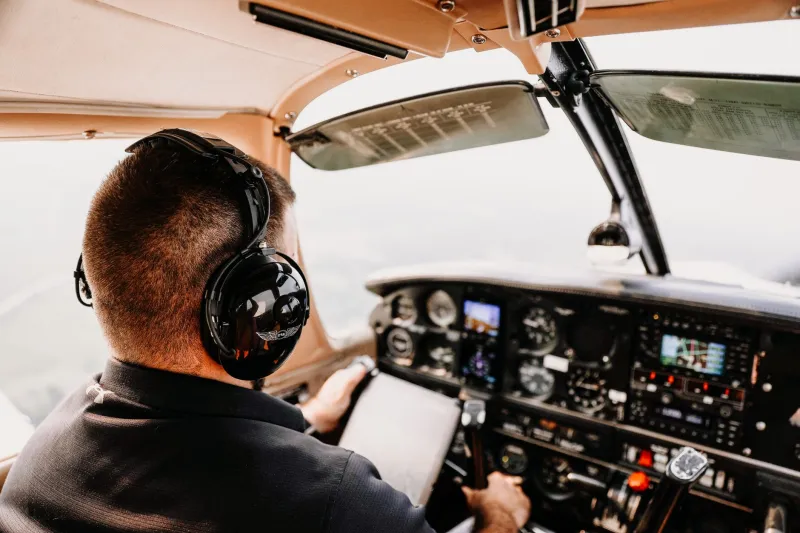
To understand what has been lost, it is necessary to understand what the role actually demanded. The co-driver in a serious grand touring or rally context was not simply a passenger with a map. The position required a specific and developed skill set: the ability to read pace notes accurately at speed, to anticipate the driver's needs rather than merely responding to them, to manage time calculations, fuel consumption, and route verification simultaneously, and to do all of this while maintaining composure in conditions that most people would find genuinely alarming.
The relationship between driver and navigator was, in competitive contexts, among the more intimate professional partnerships in sport. Björn Waldegård and Hans Thorszelius. Walter Röhrl and Christian Geistdörfer. Carlos Sainz and Luis Moya. These pairings are remembered as units — hyphenated identities in the record books — because the achievement genuinely belonged to both parties. The driver without the navigator was not a faster driver with an empty seat. The driver without the navigator was, in a meaningful sense, a different driver operating a different car.
In the broader grand touring culture that existed outside competitive motorsport, the navigator's role was less formally defined but no less real. Long-distance journeys through unfamiliar territory — before the interstate system rationalized American road travel, before GPS reduced navigation to a passive act of compliance — genuinely required a co-pilot. Route planning, map reading, distance management, fuel stop timing: these were collaborative tasks that the passenger seat was implicitly expected to accommodate. The grand tourer's capacious cockpit, its civilized noise levels, its ergonomic passenger accommodation — these were not incidental design features. They reflected an assumption about how the car would be used.
What Technology Replaced
The displacement of the human navigator happened gradually, then suddenly. Turn-by-turn navigation systems appeared in luxury vehicles through the 1990s, initially as curiosities and subsequently as standard equipment. Smartphone integration made sophisticated routing available to every vehicle regardless of price point. And the systems improved — dramatically, continuously, in ways that made the map-reading passenger increasingly redundant on anything short of a stage rally.
The practical argument for technology is essentially unanswerable. A modern navigation system does not misread a sign, does not lose its place in the pace notes, does not experience anxiety or fatigue, and does not require the driver to maintain a social relationship with it during a difficult mountain section. From a pure efficiency standpoint, the machine is superior to the human in every measurable dimension of the traditional navigating function.
What the machine cannot replicate is the relationship. The navigator was not merely a data source. The navigator was a witness — someone who experienced the same road, at the same moment, from a position of genuine involvement rather than passive transit. When Jenkinson signaled Moss through a blind crest at 170 miles per hour, the gesture communicated not only information but trust: I have studied this road, I know what is coming, I am here with you. No satellite can offer that.
The Passenger Seat's Changed Character
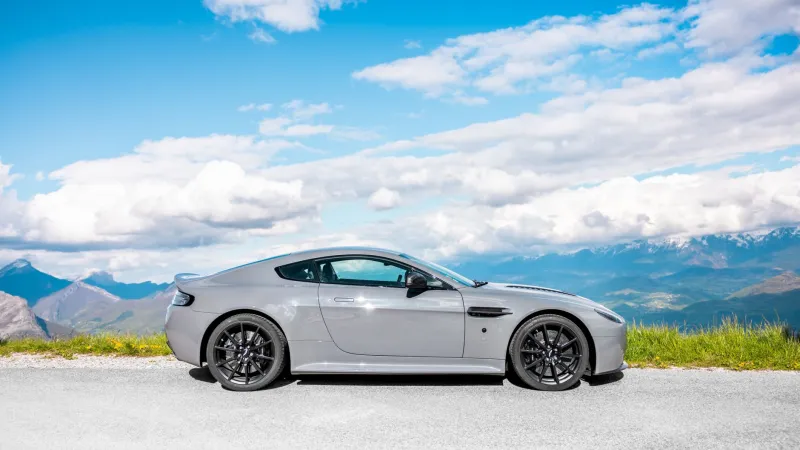
Contemporary grand tourers are designed, almost without exception, for a driver who travels with a companion rather than a co-pilot. The passenger seat in a modern Bentley Continental GT or Aston Martin Vantage is a beautifully appointed space — heated, ventilated, massaged, acoustically isolated — optimized for comfort rather than function. The passenger is expected to enjoy the journey, not to participate in its navigation. The car handles the route. The car manages the information. The car, increasingly, manages the driving itself.
This is not an argument against progress, or against the genuine pleasures that a modern grand touring interior offers its occupants. It is simply an observation about what the passenger seat used to mean, and what it means now. The transformation from co-pilot to passenger represents a fundamental shift in the social architecture of the grand touring experience — one that has received far less attention than the mechanical and technological changes that accompanied it.
Some enthusiasts have attempted to preserve the navigational tradition deliberately — planning routes using paper maps, resisting GPS dependence, treating the co-driver role as a practice to be maintained rather than a function to be automated. These efforts are admirable, if somewhat self-conscious. They acknowledge, implicitly, that something worth preserving has been allowed to atrophy.
The Weight of the Empty Seat
There is a particular quality to a grand touring journey undertaken alone — a silence that is not merely acoustic but relational. The car is magnificent. The road is demanding and rewarding in equal measure. The experience is genuinely pleasurable. And yet the passenger seat, empty and immaculate, registers as an absence.
It is the absence of someone who would have seen what you saw, felt what you felt, and been changed by the same miles in ways that would have given you something to talk about for years afterward. The navigator was not merely a practical resource. The navigator was the other half of the story. And the story, told alone, is always missing something — however precisely the technology delivers you to your destination.