What Happens in the Car Stays in the Car: The Sacred Privacy of the Grand Touring Life
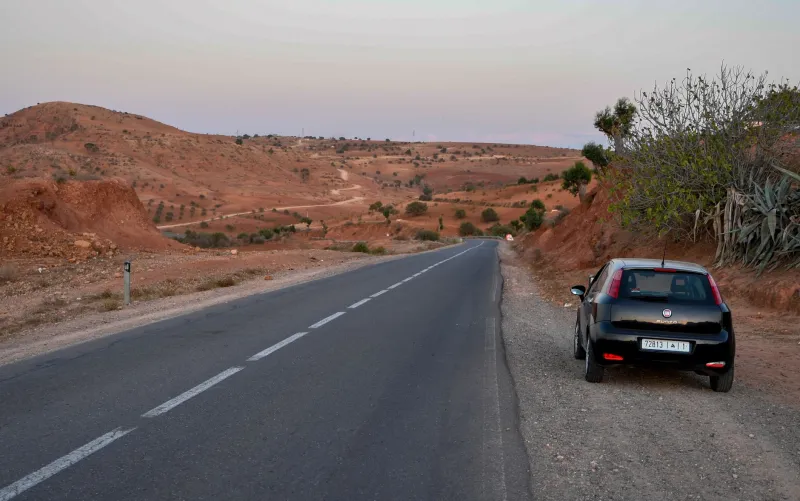
Ask any committed grand touring enthusiast about their most memorable drive, and watch what happens. There will be a pause. Perhaps a slight smile. Then, more often than not, a careful deflection—something pleasant but deliberately incomplete. "Oh, it was a good run through the mountains," they might say, as though describing a Sunday errand rather than four hours of communion with a machine on a road that barely appears on modern maps.
This is not evasiveness. It is, in its own way, a form of reverence.
The Drive That Never Gets Posted
We live in an era of compulsive documentation. Every meal, every sunset, every minor personal triumph finds its way onto a screen and into an algorithm. The automotive world has not been immune. Track days are catalogued in meticulous detail. Concours appearances are photographed from seventeen angles. Even routine weekend drives generate enough social media content to fill a small gallery.
And yet, among a certain tier of grand touring enthusiast—the type who has owned the same car for eleven years and drives it hard on Wednesday mornings when no one is watching—there is a practiced resistance to all of that. Their most significant miles are undocumented. The routes they know intimately are not pinned on any app. The experiences that have genuinely changed them do not appear in their feed.
This is not accidental. It is a choice, made deliberately and often consciously defended.
The Mountain Pass That Almost Wasn't
Consider the near-miss. Every serious driver has one. A moment on a high-altitude switchback, perhaps on a lesser-known stretch of the Blue Ridge Parkway or a remote segment of Highway 89 in Arizona, where the margin between brilliant and catastrophic compressed to almost nothing. Where the car did exactly what it was designed to do, and the driver did exactly what years of attentive seat time had prepared them for, and the result was—nothing. Just the road continuing. Just the engine settling back into its rhythm. Just the hands relaxing their grip by a fraction.
Nobody posts that. Not because it was shameful, but because it was sacred. Because reducing it to a caption would be a kind of violence against the experience itself. The near-miss on the mountain pass belongs to the driver and to the machine, and to the particular quality of light at that elevation on that morning, and to nothing else.
This is the nature of genuine grand touring experience. It resists compression. It refuses to be made portable.
The Conversation Between Driver and Machine
There is a conversation that unfolds over long miles—one that requires no audience and produces no quotable insights. It is a dialogue conducted entirely through feedback: through the weight of the steering, the sound of the exhaust note changing as the road climbs, the barely perceptible shimmy that tells an experienced driver something about the pavement ahead before they can consciously register it.
This conversation deepens over time. An owner who has covered forty thousand miles in the same car has developed a fluency that no review, no specification sheet, and no forum thread can replicate. They know what their particular machine sounds like at operating temperature on a cold morning in November. They know the precise throttle modulation required on a wet on-ramp. They know, in a way that is almost bodily, when the car is happy and when it is not.
That knowledge is intimate. Sharing it fully would require sharing the entire history of the relationship—every mile, every season, every mechanical surprise and subsequent resolution. It cannot be summarized. It can only be accumulated.
Why Discretion Has Become a Marker of Depth
In a culture that rewards visibility, discretion has become something close to a counterculture signal. The enthusiast who drives extensively but posts rarely is communicating something specific: that the experience itself is the point, not the documentation of the experience. That the miles are their own reward, requiring no external validation.
This is not a new idea. Long before anyone had a pocket-sized camera and a global audience, serious drivers understood that the road had a private character. The great grand touring routes of America—the Pacific Coast Highway at five in the morning, the Tail of the Dragon when the leaf-peepers have gone home, the high desert roads of Nevada that seem to exist outside of time—have always offered a kind of solitude that is genuinely rare. The serious enthusiast learns to protect that solitude, even from themselves, by refusing to reduce it to content.
There is also something protective in the silence. Routes shared too broadly become congested. Moments described too precisely lose their texture. The best kept secret in American driving is always the road that only a handful of people know how to find and when to travel it.
The Garage as Confessional
If these stories live anywhere, they live in the garage. Not in conversation, exactly—more in the ritual acts of ownership. The long inspection after a demanding drive. The careful cleaning that is really a form of debrief. The moment of standing in the doorway before turning off the light, looking at the car in the particular way that acknowledges everything the two of you have been through together.
The garage is where the stories are kept. Not filed away, exactly, but absorbed—into the paint, into the wear patterns on the steering wheel, into the small mechanical history that a careful owner carries in their memory. That faint scuff on the lower rocker panel from a gravel road in Montana. The replacement right-front wheel bearing from a winter that was harder than expected. These are the autobiography of the relationship, written in maintenance records and mechanical memory rather than in words.
The Authenticity That Silence Protects
There is a final reason why the best grand touring stories stay private, and it is perhaps the most important one. Authenticity, in automotive culture as in most things, is fragile. It survives in the space between experience and performance. The moment an experience becomes primarily about how it will be presented to others, something essential is lost.
The driver who pulls off a remote highway at dusk to simply sit with the engine ticking as it cools, watching the light change over a landscape that has no name in any guidebook, is having an experience of absolute authenticity. It is happening for no one but them. It cannot be made into anything other than what it is.
This is grand touring at its most fundamental: the road, the machine, the driver, and nothing else. No audience required. No documentation necessary. The experience complete in itself, held privately, appreciated deeply, and—in the truest tradition of the enthusiast—never quite fully explained to anyone who wasn't there.
Which is everyone. Because no one else was there. That was always the point.