Steel and Memory: How a Grand Tourer Becomes the Most Meaningful Thing You Leave Behind
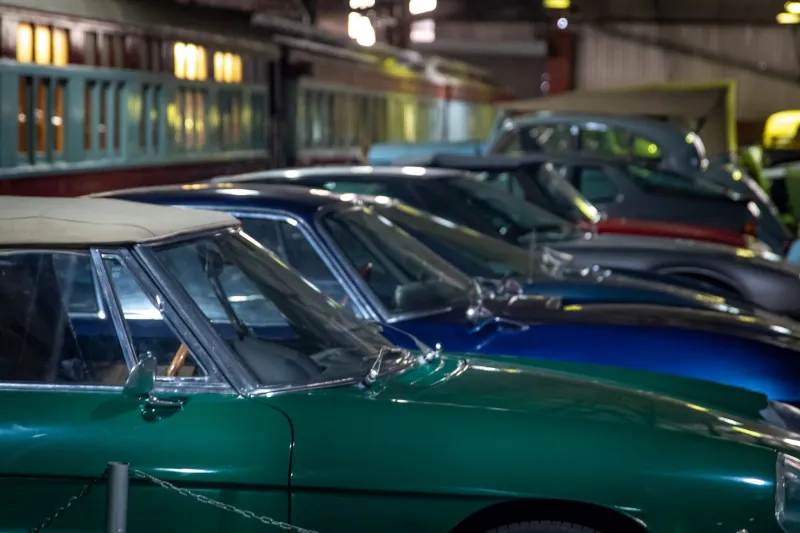
There is a particular quality of silence that settles over a garage after its keeper is gone. The tools hang in their ordained positions. The oil-stained floor holds the ghost of a thousand Sunday mornings. And there, beneath a cloth cover that has not been disturbed in months, sits the car — patient, purposeful, waiting for someone to understand what it means.
For families across America, that moment of reckoning arrives with unexpected force. A grand tourer is not a stock portfolio or a vacation property. It cannot be divided cleanly among heirs or appraised with clinical detachment. It carries something that resists valuation: the accumulated weight of a life lived at speed, in style, with intention.
More Than Machinery
When Richard Calloway of Asheville, North Carolina, inherited his father's 1972 Jaguar E-Type Series III coupe, he received it alongside a single legal pad covered in his father's handwriting — notes on the car's quirks, its preferred fuel grade, the name of the mechanic in Charlotte who understood its temperament. "I knew more about that car than I knew about my father's finances," Calloway says. "He never talked about money. But he talked about that Jaguar constantly. It was the most honest thing he left me."
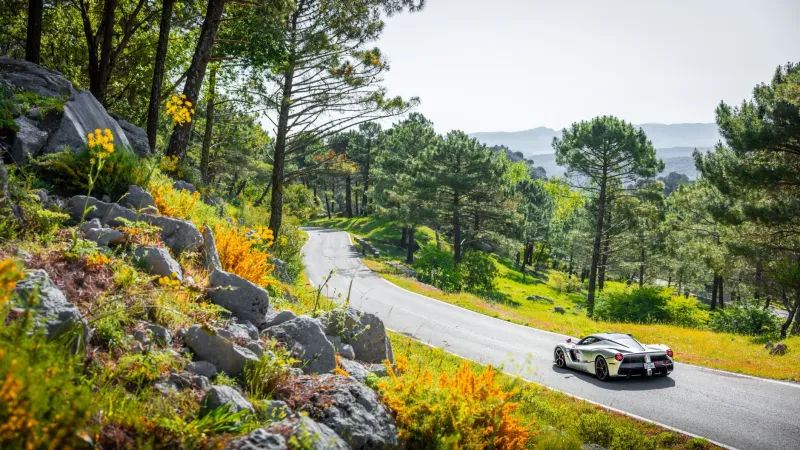
This is not an isolated sentiment. Among collectors and grand touring enthusiasts, the notion of vehicular legacy has grown into something approaching a philosophy. The grand tourer — by its very nature a machine designed for sustained, purposeful travel rather than mere point-to-point utility — lends itself to accumulating narrative in ways that economy cars simply cannot. Every long-haul crossing of the American Southwest, every alpine pass in the Rockies, every predawn departure for a driving event leaves a residue that is felt rather than measured.
The mechanical intimacy demanded by a serious grand tourer deepens this bond considerably. An owner who has tracked down an intermittent electrical fault across three states, or nursed a temperamental carburetor through a Montana winter, has entered into a relationship that transcends ownership. The car knows things about its keeper. And, in turn, the keeper knows things about themselves that only distance and difficulty can reveal.
The Stories Embedded in the Steel
Marianne Okafor, a collector based outside of Houston, drives a 1988 BMW M5 that belonged to her late husband. She has declined multiple purchase offers, some of them generous by any measure. Her reasoning is precise: "Every scratch on that car has a story I can tell. The one on the rear quarter panel — that was a parking garage in New Orleans during Jazz Fest, 2003. The scuff on the door sill is from when he tried to teach our son to drive a manual in an empty church lot. I'm not selling the stories."
This is the paradox that estate attorneys and auction houses struggle to navigate. The market value of a vehicle and its biographical value occupy entirely separate registers. A grand tourer that has served as the backdrop for a family's most significant moments — cross-country moves, honeymoon drives, the first solo trip a teenager took with a freshly minted license — carries a freight that no Hagerty valuation can fully acknowledge.
The physical form of the car becomes a kind of mnemonic device. Climb behind the wheel of a machine your father drove for thirty years, and the geometry of the cockpit — the precise angle of the steering wheel, the worn leather on the driver's bolster, the particular sound the door makes when it closes — triggers a sensory memory that is almost biological in its intensity. You are not simply sitting in a car. You are inhabiting someone else's posture, their habits, their way of engaging with the world at speed.
Passing the Keys, Passing the Values
What makes the grand tourer particularly suited to this kind of inheritance is what the vehicle implicitly demands of its driver. Grand touring is not passive. It requires attention, commitment, and a certain philosophical orientation toward the act of travel itself. To drive a proper grand tourer well is to embrace the idea that the journey carries intrinsic value — that the miles between departure and destination matter as much as either endpoint.
When a parent passes such a machine to a child, they are not merely transferring an asset. They are transmitting an entire framework for engaging with the world. The discipline of maintaining a complex mechanical object. The patience required to understand a car's character before demanding its limits. The belief that quality, properly cared for, endures.
David Marchetti, a second-generation Ferrari owner in suburban Chicago, articulates this clearly. His 1985 Ferrari 308 GTSi came to him from his uncle, along with an unspoken curriculum. "My uncle never sat me down and lectured me about life," Marchetti explains. "But he spent fifteen years showing me how to take care of something beautiful. How to not cut corners. How to do the hard thing properly instead of the easy thing quickly. I learned all of that through that car. It was the most thorough education I ever received."
The Obligation of Stewardship
There is, of course, a corresponding weight to this kind of inheritance. A grand tourer received as a family legacy is not simply yours to enjoy — it arrives with an obligation of stewardship that can feel both profound and occasionally burdensome. To neglect such a machine is to disrespect the person who entrusted it to you. To modify it carelessly is to erase the very history that made it significant.
Many inheritors navigate this tension thoughtfully, choosing to preserve the car's original character while ensuring it remains mechanically sound enough to actually use. There is wisdom in this approach. A grand tourer that gathers dust beneath a cover, too precious to drive, has lost the essential quality that made it worth preserving in the first place. These machines were built for roads, not museums.
The most meaningful inheritances, enthusiasts consistently report, are the ones where the car continues to accumulate miles and stories under its new stewardship. Where the child or grandchild adds their own chapter to the narrative without erasing what came before. Where the machine remains, as it was always intended to be, a vessel for living.
What We Choose to Leave
In a culture that increasingly privileges the digital and the disposable, there is something quietly radical about the idea that a well-chosen grand tourer might outlast its owner with its significance intact — and perhaps even magnified. Algorithms do not age gracefully. Streaming subscriptions cannot be inherited. But a beautifully engineered machine, maintained with care and driven with intention, can carry a family's identity across generations in a way that few other objects can approach.
The grand tourer, at its finest, is a declaration of values as much as a vehicle. It says something about how its owner chose to engage with time, with craft, with the particular American freedom of the open road. When those keys pass from one generation to the next, that declaration does not expire.
It simply finds a new voice.