Hide and Seek: The Honest Truth About Premium Leather in a Working Grand Tourer
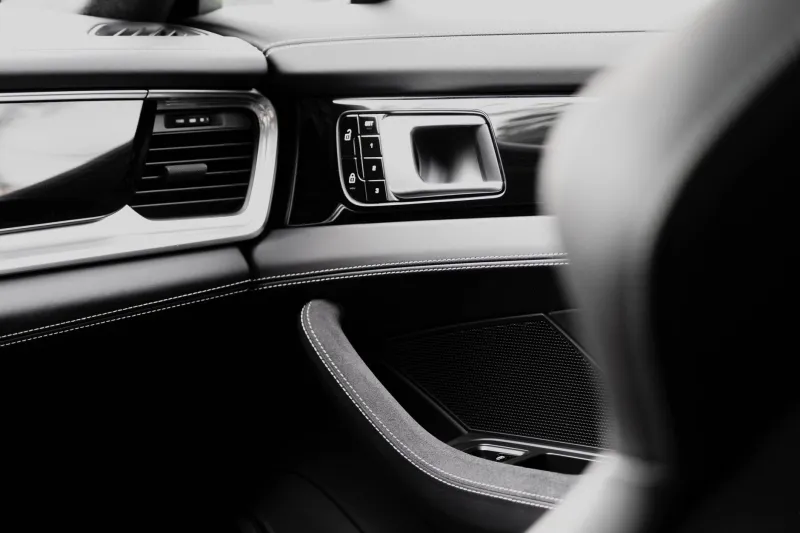
There is a particular kind of pride that comes with sliding into the cabin of a well-kept grand tourer after fifty thousand miles. The leather has conformed to your shape, the patina tells a story of long highway stretches and mountain passes, and the whole interior smells faintly of something between a saddler's workshop and a good life lived at speed. That is the dream, anyway. The reality, for a great many enthusiasts, is something considerably less romantic — cracked bolsters, peeling seat edges, and a dashboard that looks as though it spent a decade parked under a Phoenix sun.
The gap between those two outcomes is not merely a matter of luck or climate. It is the product of material grade, manufacturing intent, and the kind of care that most owners either overlook or never understood was necessary in the first place.
Not All Leather Is Created Equal — Not Even Close
The automotive industry has developed a vocabulary that flatters its products. Terms like "full-grain leather," "Nappa hide," and "semi-aniline finish" appear in configurator menus and window stickers without any particular obligation to explain what they mean in practice. For the buyer of a new grand tourer, this ambiguity is manageable. For the buyer of a three-year-old example with forty thousand miles on the clock, it becomes the difference between a bargain and a problem.
Full-grain leather, sourced from the outermost layer of the hide with minimal surface correction, is the gold standard. It breathes, it develops a genuine patina, and when properly maintained, it can outlast the mechanical components beneath it. You will find it in the upper trim levels of manufacturers who take their craft seriously — certain Bentley specifications, the finest Porsche leather packages, and the top-tier offerings from Mercedes-AMG's designo program. The catch is that full-grain leather requires consistent attention. Neglect it for a single dry season and it will tell you so.
Correct-grain and split leather, which occupy the lower rungs of the automotive hierarchy, are a different matter entirely. These materials have been buffed, pigmented, and coated to achieve a uniform appearance that full-grain hides simply cannot offer straight from the tannery. They look impeccable in the showroom. They are forgiving of light spills and casual maintenance. But beneath that painted surface, the material is compromised. Once the coating begins to fail — and it will, typically somewhere between five and ten years of regular use — there is no recovering it. The peeling you see on aging luxury sedans is almost never a failure of genuine leather. It is a failure of the coating applied over a lesser hide.
The Maintenance Equation Most Owners Get Wrong
A persistent myth in grand touring circles holds that premium leather demands premium effort — that proper care requires a cabinet full of specialist products, a weekend ritual, and the kind of obsessive attention that most working enthusiasts simply cannot sustain. This assumption leads to one of two equally damaging outcomes: either the owner over-treats the leather with incompatible products that soften and discolor it, or they do nothing at all and watch it deteriorate by default.
The honest maintenance equation is far simpler. Full-grain and semi-aniline leathers require two things above all else: regular cleaning with a pH-neutral product and periodic application of a quality conditioner. In the continental United States, where climates range from the humidity of the Gulf Coast to the arid heat of the Southwest, the frequency of that conditioning matters. A grand tourer garaged in Atlanta needs attention perhaps twice a year. The same car driven through Scottsdale summers may need conditioning every eight to ten weeks simply to replace the oils that the heat draws out of the hide.
What most owners never learn is that the greatest threat to leather in a regularly driven car is not dirt, sunlight, or even heat in isolation. It is the combination of skin oils, perspiration, and the mechanical friction of entry and exit concentrated on the same surfaces — the outboard bolster of the driver's seat, the leading edge of the steering wheel, the armrest. These zones require targeted attention rather than a uniform approach applied to the entire interior.
When Patina Is a Virtue and When It Is Simply Damage
The grand touring community has, in recent years, developed an almost romantic attachment to the concept of patina. Inspired in part by the watch world's appreciation for tropical dials and aged lume, enthusiasts increasingly celebrate the worn leather of a high-mileage driver as evidence of authenticity. There is something to this argument, but it requires an honest distinction that is frequently glossed over.
Genuine patina — the deepening of color, the subtle creasing along natural stress lines, the way a well-used steering wheel develops a polished quality at the grip points — is the mark of quality leather aging honestly. It is the equivalent of a well-worn pair of shell cordovan shoes. It improves with use because the underlying material has the integrity to absorb and reflect that use gracefully.
What gets misidentified as patina in lesser interiors is simply deterioration. Cracking is not character. Peeling is not personality. A driver's seat that has lost structural integrity in the bolster is not telling a story — it is announcing a failure of materials. The distinction matters because it affects purchasing decisions, restoration choices, and the long-term value of a collection.
When evaluating a used grand tourer, the condition of the leather is among the most reliable indicators of how the previous owner approached the car overall. A cabin with dry, cracked hides and sun-faded surfaces suggests someone who treated the car as transportation. A cabin with supple, evenly conditioned leather — even with honest wear at the contact points — suggests someone who understood what they owned.
Restoration Versus Preservation: Choosing Your Philosophy
For owners of older grand tourers, the question eventually arrives: restore or preserve? Professional leather restoration has advanced considerably, and a skilled craftsman can re-dye, recondition, and in some cases re-stitch an interior to a condition that approaches its original specification. For a car with genuine collector significance, this work can be worthwhile and, when done properly, does not necessarily compromise authenticity.
Preservation, however, remains the more defensible philosophy for most situations. A grand tourer that has been consistently maintained from new — never allowed to deteriorate to the point where intervention becomes necessary — will almost always present better than one that has been restored, however competently. The original surface of quality leather carries a quality that restoration products can approximate but rarely replicate.
The practical implication is that the best time to care for your grand tourer's interior is before it needs it. Not when the cracking begins. Not when the bolsters have gone soft. From the first mile, and consistently thereafter, because the leather you are tending is not simply a comfort feature. It is the part of the car that you are in contact with for every moment of every journey — the tactile dimension of grand touring that no mechanical specification can fully account for.
The road and the hide, it turns out, have more in common than they first appear. Both reward consistent attention, both develop character under the right conditions, and both will tell you, clearly and without ambiguity, exactly how they have been treated.