When Numbers Lie: The Case Against the Horsepower Arms Race
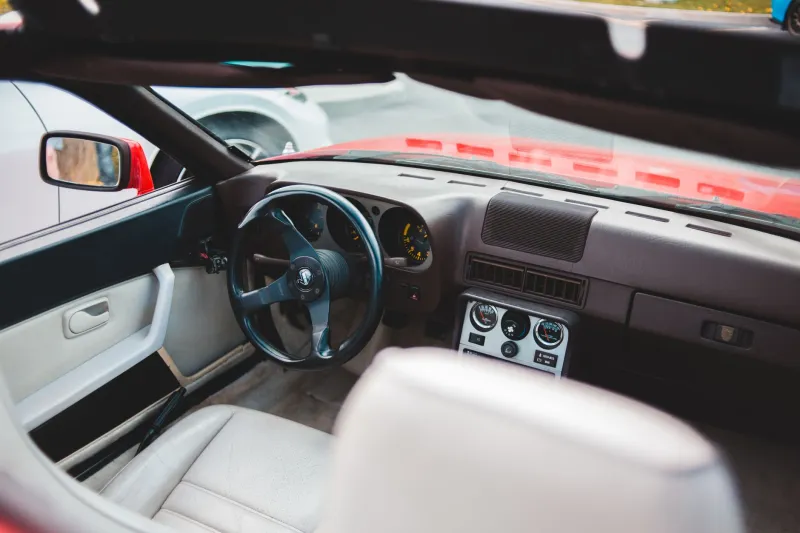
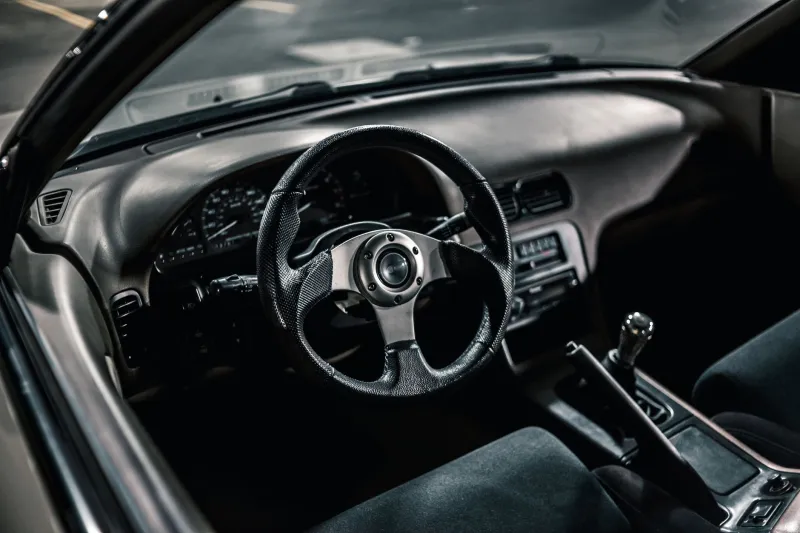
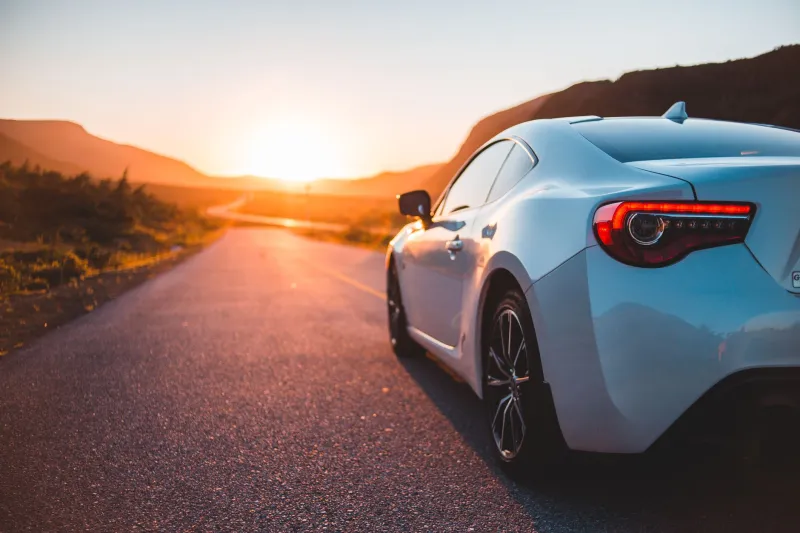
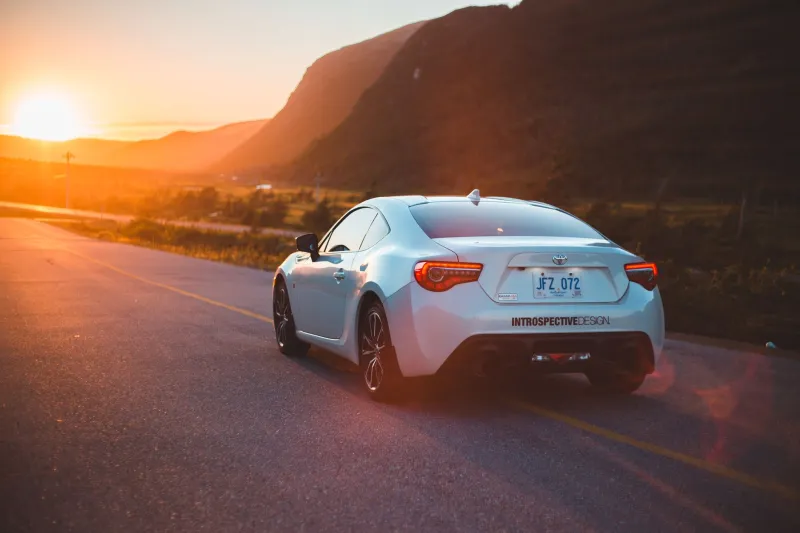
There is a particular moment that every serious driver knows. It arrives not at full throttle on an empty highway, but somewhere quieter — a sweeping back road at seven-tenths, the steering alive in your hands, the engine breathing in a register that feels almost conversational. In that moment, the horsepower figure on the window sticker becomes entirely irrelevant. What matters is the dialogue between machine and driver, and that dialogue, increasingly, is being drowned out by the very power meant to amplify it.
The American automotive landscape has never been more technically extraordinary. Turbocharged engines, torque-vectoring differentials, active aerodynamics, and multi-mode electronic stability systems have conspired to produce road cars that accelerate with a ferocity once reserved for purpose-built racing machinery. A family sedan can now embarrass the supercar benchmarks of fifteen years ago. By every measurable standard, we are living in the golden age of performance.
And yet something has gone quiet.
The Tyranny of the Spec Sheet
The obsession with horsepower is, at its core, an obsession with abstraction. A number printed on a page — 700 horsepower, 800 horsepower, 1,000 horsepower — carries enormous psychological weight precisely because it is so difficult to contextualize. Human beings cannot feel the difference between 650 and 750 horsepower in any meaningful, granular way. What they can feel, with extraordinary precision, is the quality of information flowing through the steering column, the progressive buildup of resistance in a naturally aspirated throttle, the way an engine's character shifts as it climbs through its rev range.
These are the sensations that define great grand touring, and they are increasingly rare in an era when manufacturers compete not on feel but on figures.
The turbocharged engine is the clearest illustration of this phenomenon. Modern forced-induction units are engineering marvels — efficient, powerful, and remarkably tractable across a broad range of conditions. But the turbocharged power delivery, however smooth engineers have made it, fundamentally alters the relationship between driver input and mechanical response. Torque arrives in waves rather than gradients. The connection between throttle position and engine behavior is mediated by boost thresholds and electronic management systems. The result is performance that is undeniably fast but emotionally opaque.
What the Old Cars Understood
Consider the Ferrari 308 GTB, a car producing a modest 240 horsepower in its Quattrovalvole configuration — a figure that would be considered underwhelming in a contemporary hot hatchback. Drive one today and the experience is revelatory. Every input matters. The throttle communicates with the directness of a telegraph wire. The gearbox demands precision and rewards it handsomely. The engine, spinning freely to its redline, produces a sound that is less mechanical noise than emotional argument.
Or consider the Porsche 911 Carrera of the air-cooled era, or an early Jaguar E-Type on a clear morning in the American Southwest, its straight-six pulling smoothly through the gears while the landscape opens ahead. These machines offered perhaps a third of the horsepower available in their modern successors. They also offered something their successors frequently cannot: the sense that the driver is genuinely, consequentially in control.
This is not nostalgia for its own sake. It is a recognition that mechanical transparency — the quality that allows a driver to feel precisely what the car is doing and why — is a finite resource, and one that the horsepower arms race tends to consume.
The Electronic Curtain
Modern performance cars are, by necessity, heavily managed. When an automobile produces 600 or 700 horsepower, electronic intervention is not a luxury but a survival requirement. Stability control, launch control, torque vectoring, and adaptive suspension systems work in concert to make that power usable by drivers of ordinary skill. They do their job extraordinarily well. They also, inevitably, insert themselves between the driver and the machine.
The grand touring tradition has always resisted this insertion. The great GT cars of history — the Aston Martin DB5, the Lancia Aurelia B20, the early BMW 6 Series — were not powerful by contemporary standards. They were, however, honest. Their handling characteristics could be understood, predicted, and ultimately mastered by a committed driver. The satisfaction they offered was proportional to the skill invested, which is precisely why the memories they create tend to outlast those produced by faster, more capable, more electronically sophisticated machinery.
There is a useful analogy in American culture's relationship with acoustic versus amplified music. A concert pianist performing Chopin in an intimate hall produces an experience of extraordinary intimacy and nuance. A stadium rock concert, despite its overwhelming sensory assault, often leaves less of a lasting impression. Volume and power are not the same as depth of experience.
The Rebel Machines
It would be unfair to suggest that the current market has entirely abandoned the virtues of mechanical engagement. A handful of manufacturers continue to resist the horsepower arms race with admirable conviction.
Porsche's GT division, with the 911 GT3 and its naturally aspirated flat-six, has staked a principled position against forced induction in an era when the rest of the industry has largely abandoned it. The result is an engine that rewards commitment with a linearity of response that turbocharged units simply cannot replicate. Similarly, Lotus has long built its identity around lightness and feedback rather than outright power — a philosophy that produces cars far more engaging than their modest specifications suggest.
Even within the American market, where bigger has traditionally meant better, there are signs of a philosophical recalibration. The Mazda MX-5 Miata remains the most consistently praised driver's car in the country, despite — or because of — its 181 horsepower. Enthusiasts who have driven everything from Lamborghinis to Ferraris return to the Miata not in spite of its limitations but because of the quality of conversation it offers.
Redefining the Standard
The serious grand touring enthusiast ultimately arrives at a conclusion that runs counter to the prevailing market logic: the most satisfying machines are rarely the most powerful ones. They are the most communicative, the most honest, the most willing to reward driver development with genuine feedback rather than electronic flattery.
This is not an argument against progress or technical achievement. It is, rather, an argument for a different set of values — one in which the measure of a great automobile is not how quickly it can cover a quarter mile, but how deeply it can engage the person behind the wheel across a long and winding road.
The horsepower figure on the specification sheet tells you what a car can do. It tells you nothing about how that car will make you feel. And in the world of grand touring, where the journey is the destination and every mile is an opportunity for genuine engagement, feeling is everything.
The road does not care about your horsepower rating. It only asks whether you are paying attention.