Three Pedals, One Truth: The Enduring Case for the Manual Gearbox in a World That Has Moved On
The numbers, taken at face value, are damning. A modern dual-clutch transmission can execute a gear change in under one hundred milliseconds. A skilled human driver, working a conventional clutch and lever with practiced precision, requires somewhere between three hundred and five hundred milliseconds to complete the same operation. By every measurable performance metric, the machine has won. The argument, on paper, is settled.
And yet.
In garages from Marin County to the Carolina foothills, a quiet insurgency is underway. Collectors are paying premiums for manual-equipped variants of cars that were also offered with faster, more efficient automatics. Enthusiasts are tracking down the final model years before manufacturers deleted the third pedal. Driving schools are reporting renewed interest in heel-and-toe technique among students who have grown up in a world that never required it. The manual gearbox, pronounced dead on more than one occasion, continues to draw breath — and the reasons why illuminate something fundamental about what grand touring actually means.
The Measurement Problem
Speed is not the only currency worth spending behind the wheel. This is, in many respects, the foundational principle of grand touring as a discipline. The grand tourer was never conceived as a pure performance instrument; it was conceived as a device for transforming distance into experience, for making the journey the destination. Within that philosophy, the question of whether a gearbox shifts in one hundred milliseconds or four hundred milliseconds is largely irrelevant. What matters is what the act of shifting feels like, and what it demands of the person doing it.
A paddle shifter asks nothing of you. You extend a finger. The car complies. There is a certain satisfaction in that seamlessness, particularly when pressing hard through a mountain sequence and the transmission anticipates your intentions with algorithmic precision. But satisfaction and engagement are not synonymous. The former is passive; the latter requires participation.
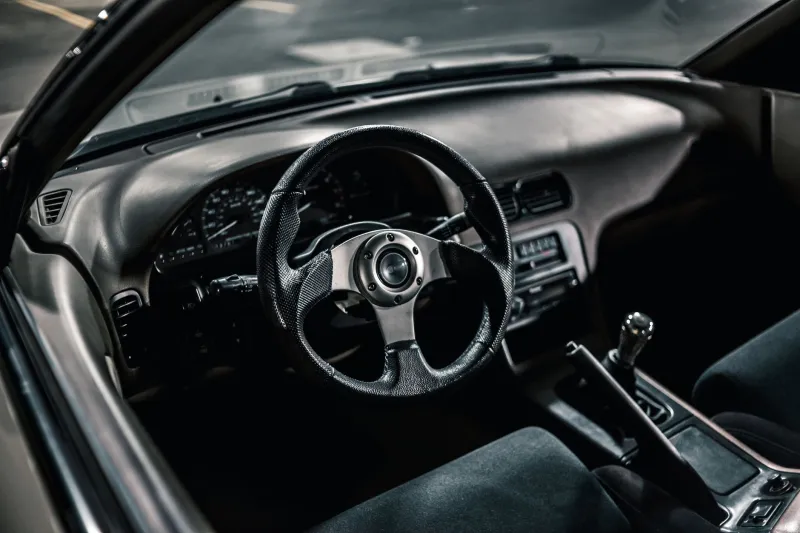
The manual gearbox, by contrast, is a constant negotiation. It asks you to think ahead, to read the road, to understand where the engine wants to be in its powerband before you arrive at the moment requiring that power. It demands the left foot and right hand operate in concert while the right foot manages throttle and the eyes remain fixed on what lies ahead. It is, in the truest sense, a coordination exercise — and coordination, when mastered, produces something that feels remarkably like fluency.
The Language Analogy
Consider the difference between speaking a second language and using a translation application. The app is faster, more accurate, and requires no practice. It will render the phrase correctly every time. But the person who has labored through conjugations and idioms and the particular music of a foreign tongue has access to something the app cannot provide: an intimate understanding of how the language thinks, what it values, where it places its emphasis.
Driving a manual gearbox is, in this sense, learning the native language of the automobile. Every mechanical connection — the progressive resistance of the clutch pedal, the tactile notchiness of a well-worn gate, the slight shudder of an imperfect rev-match — communicates information about the machine's condition and character. The driver who can interpret these signals is not simply operating the vehicle; they are in conversation with it.
This is not romanticism for its own sake. It is the difference between understanding your car and merely directing it.
What the Market Is Telling Us
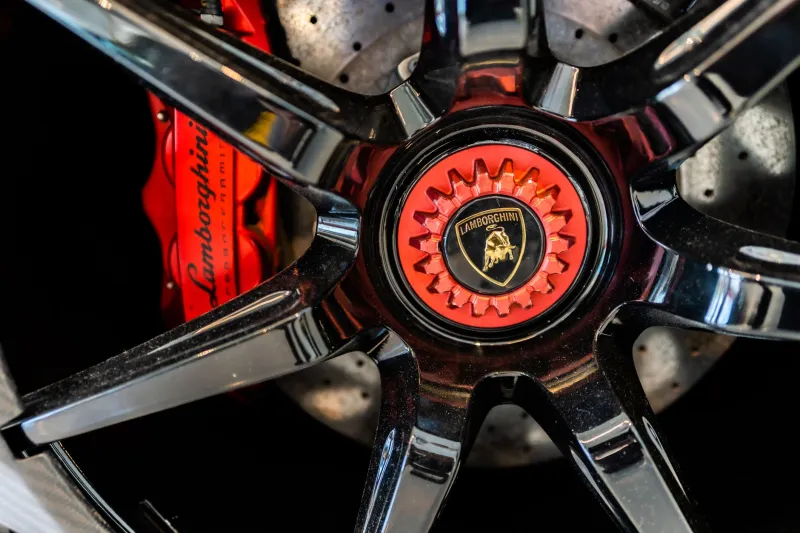
The automotive industry's retreat from manual transmissions has been swift and, for enthusiasts, somewhat disorienting. Ferrari has not offered a conventional manual since the 599 GTB era. Lamborghini abandoned the format years ago. Even Porsche, long the standard-bearer for driving purity in the American market, has made the manual an increasingly rare option rather than a default choice. The 911 GT3's return to a six-speed manual was treated as a significant cultural event — evidence enough of how far the pendulum had swung.
Yet the secondary market tells a different story. Manual-equipped variants of the E46 BMW M3 trade at consistent premiums over their SMG-equipped counterparts, despite the SMG's theoretical performance advantages. The six-speed Porsche 996 Carrera commands stronger collector interest than equivalent Tiptronic examples. Enthusiast forums in the United States are filled with buyers specifically filtering their searches to exclude automatics, even when the automatic would offer superior lap times.
This is the market expressing a preference that the industry has largely chosen to ignore. The preference is not for slower cars. It is for more involving ones.
The Ritual Dimension
There is a ceremonial quality to driving a proper manual grand tourer on a long American highway that resists easy articulation. The act of departing — clutch down, first gear, easing out as the revs settle — has a deliberateness that an automatic's D position cannot replicate. Each gear change on a two-lane road through the Ozarks or across the Nevada basin is a small decision, a micro-commitment to a particular relationship between engine speed and road speed. Over several hundred miles, these small decisions accumulate into something that feels, improbably, like authorship.
You have not simply traveled the road. You have played it.
This is the dimension that no objective performance benchmark captures and that no algorithm can simulate. It is the reason why a driver returning from a six-hour run through the Appalachians in a manual-equipped grand tourer arrives not merely at a destination but at a particular state of focused exhaustion — the pleasant fatigue of sustained concentration — that automatic drivers rarely experience in quite the same way.
Preservation as Principle
For the serious collector and enthusiast, the case for maintaining at least one manual-equipped machine in the garage goes beyond personal preference. It is, increasingly, an act of preservation. These cars represent the final expressions of a mechanical tradition stretching back to the earliest days of the automobile. The engineers who designed the gated shifter of a classic Ferrari or the precise, rifle-bolt action of a vintage Porsche six-speed were solving an engineering problem with craft as well as calculation. That craft deserves to be kept alive and operational.
Driving a manual is the most direct way to honor that tradition. Not displaying it. Not insuring it for a value that discourages use. Driving it — through traffic, through mountain passes, across the plains — and experiencing firsthand why generations of drivers considered the mechanical shift not a limitation to be engineered away but a pleasure to be cultivated.
The Last Word
The dual-clutch transmission will continue to improve. It will shift faster, respond more intelligently, and consume less fuel. It will, in every quantifiable respect, become superior to the manual gearbox. None of this changes the essential argument.
Grand touring has never been about the quantifiable. It has been about the felt — the texture of a journey, the quality of engagement, the particular satisfaction of arriving somewhere knowing that you, not an algorithm, chose every gear along the way. The manual gearbox, with its demands and its rewards and its irreducible humanity, remains the purest expression of that philosophy.
Three pedals. One truth. The road is still out there, and it deserves your full attention.