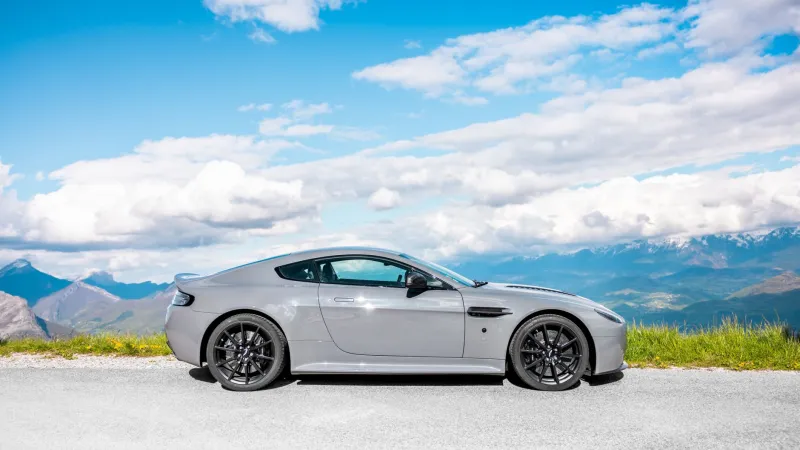
Engineered Modesty: The Deliberate Design Philosophy That Makes Modern Grand Tourers Safer Than Their Numbers Suggest

Consider the following scenario. A driver with moderate experience, perhaps ten years behind the wheel and no formal performance training, settles into the cockpit of a contemporary grand touring machine producing somewhere north of five hundred horsepower. The road ahead is dry, the conditions are clear, and the driver — perhaps feeling more confident than the situation warrants — applies full throttle at the exit of a second-gear corner.
In 1985, this scenario would have ended badly. In 2024, the car manages the moment with a composure that borders on the philosophical. The rear steps out fractionally, the stability system intervenes with a precision measured in milliseconds, the power delivery modulates, and the car exits the corner cleanly, having protected the driver from the consequence of his own ambition. The driver, if he is attentive, may have felt a brief firmness in the steering, a subtle tightening of the car's demeanor. If he is inattentive, he may not have noticed anything at all.
This is not an accident. It is, in the most literal sense, an engineering achievement — and one that deserves considerably more examination than it typically receives.
The Architecture of Intervention
Modern electronic stability control systems — present in every vehicle sold in the United States since 2012, but implemented with particular sophistication in grand touring machines — operate on a framework that would have seemed implausible to engineers of a previous generation. Contemporary systems sample wheel speed, lateral acceleration, yaw rate, and steering angle at frequencies approaching one hundred times per second. They compare the driver's apparent intention, as expressed through steering input, against the car's actual behavior, and intervene with targeted brake application to individual wheels when the two diverge beyond a calculated threshold.
In a grand touring context, this intervention is calibrated with exceptional nuance. The engineers at Porsche, BMW's M division, and Mercedes-AMG invest considerable resources in defining the character of their stability systems — not merely their technical parameters, but their personality. A well-tuned stability system in a grand tourer does not simply prevent accidents. It communicates with the driver, providing a sensory record of its interventions that allows a skilled operator to learn the car's limits progressively, safely, and honestly.
This is a meaningful distinction. Stability systems designed for mass-market vehicles prioritize invisibility — the intervention is intended to be seamless, the driver unaware. Systems designed for grand touring machines are intended to be felt, to be educational, to be part of the ongoing dialogue between driver and machine that defines the category.
The Tire as the First Engineer
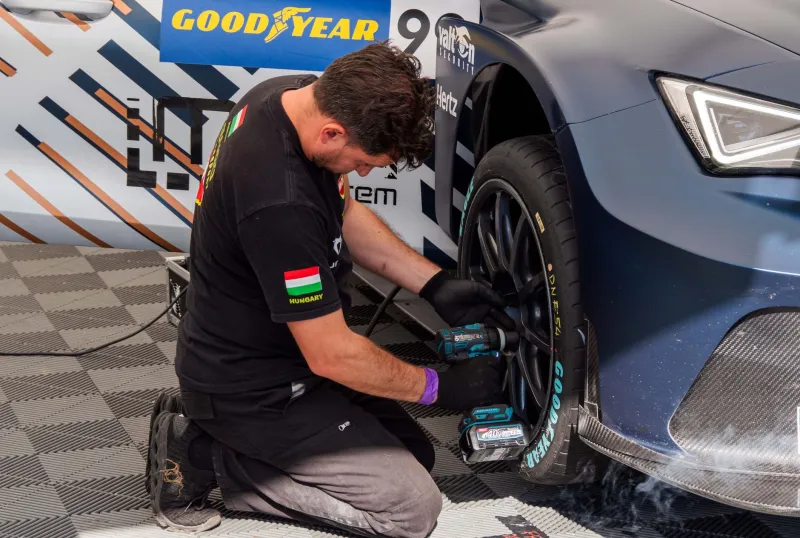
Before any electronic system intervenes, the tire makes its own decisions about how to manage the forces a driver generates. Modern grand touring tire technology represents one of the more remarkable engineering achievements of the past two decades — a simultaneous improvement in dry grip, wet performance, durability, and communicative feedback that previous generations of engineers would have considered physically impossible.
The compound chemistry involved in a contemporary performance tire from Michelin, Pirelli, or Continental is extraordinarily complex — polymers engineered to maintain consistent grip across a temperature range that would have compromised earlier materials, tread geometries designed to channel water with a precision that defies intuition, sidewall constructions calibrated to transmit road information to the driver while absorbing the shocks that would otherwise disturb the car's composure.
Crucially, these tires are designed not merely to perform at their limits but to communicate clearly as those limits approach. The progressive degradation of grip — the gradual transition from adhesion to slide — is a deliberate design characteristic, not a byproduct. A tire that breaks away suddenly and without warning is dangerous. A tire that provides a clear, escalating signal of its own limitations is, in the most practical sense, a safety system in its own right.
Chassis Geometry as a Philosophy
The suspension geometry of a grand touring machine encodes a set of values about the relationship between driver and car that are as deliberate as any aesthetic decision made in the design studio. The choices made in setting camber, caster, toe, and anti-roll characteristics define not merely how a car handles, but what kind of driver it rewards and what kind of driving it encourages.
Grand touring geometry, as distinct from outright track-focused architecture, typically prioritizes stability over ultimate response. A track car may be configured for maximum agility — quick steering, stiff springs, minimal compliance — because the driver is trained, the environment is controlled, and the objective is speed. A grand tourer is configured for composed, predictable behavior across a wide range of conditions and driver inputs, because its driver may be crossing three states in an afternoon, encountering construction zones, variable weather, and the cumulative fatigue of long-distance travel.
This is not a compromise. It is a considered philosophy, and one that reflects a mature understanding of what the car is actually for. The engineer who sets the suspension of a grand tourer is not limiting the car's capability. He is defining the envelope within which capability can be safely and sustainably accessed by a real driver, in real conditions, over real distances.
The Thoughtful Driver's Advantage
There is a tendency, in certain corners of automotive culture, to regard these systems — the stability control, the sophisticated tires, the geometry tuned for composure — as concessions to timidity. This view misunderstands what engineering restraint actually represents.
The grand tourer's architecture of deliberate modesty is not designed for the driver who lacks confidence. It is designed for the driver who possesses enough judgment to recognize that confidence, on the open road, must be earned incrementally and maintained with humility. The stability system does not replace skill. It creates the conditions under which skill can develop without catastrophic consequence.
The supercar demands a driver prepared to operate at its limits at all times. The grand tourer invites a driver to grow into it — to discover, over thousands of miles and varied conditions, the full dimension of what the machine can do. This is a more sophisticated relationship, and one that rewards the thoughtful enthusiast rather than the merely ambitious one.
In this sense, the physics of restraint are not a limitation on the grand touring experience. They are its foundation — the engineering expression of a conviction that the road is best enjoyed by those who approach it with both passion and perspective, and that the finest machines are those wise enough to know the difference.