Buttons, Not Bytes: The Case for Keeping Human Hands in Control of the Grand Tourer
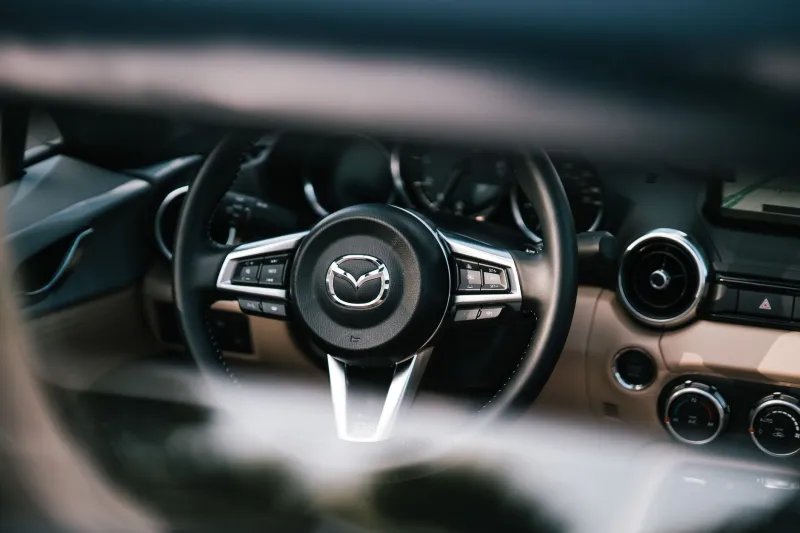
There is a particular satisfaction in reaching for a knob — a real, physical knob — and feeling it click through its detents with the quiet authority of something built to last. No lag. No confirmation prompt. No software handshake between your intention and the car's response. You turn it; something happens. That relationship, direct and unambiguous, is among the oldest pleasures a cockpit can offer. And it is disappearing.
The modern automotive interior has become a battleground, and analog controls are losing ground with every model-year refresh. Across the segment — from German grand touring flagships to American performance machines — physical buttons are being consolidated, relocated, or eliminated entirely in favor of capacitive surfaces, nested menus, and voice-command systems that require the patience of a software engineer and the memory of a sommelier. The stated justifications are familiar: cleaner aesthetics, easier over-the-air updates, reduced manufacturing complexity. What rarely appears in the press release is the cost to the driver.
What the Touchscreen Actually Costs You
The case against touchscreen-dominant interiors is not merely sentimental. It is ergonomic, physiological, and — on a long, demanding drive — genuinely consequential.
When a driver reaches for a physical climate control, muscle memory handles the transaction. The hand moves; the finger finds the button; the adjustment is made. Eyes remain on the road. The cognitive load is negligible. Replace that button with a touchscreen submenu, and the calculus changes entirely. The driver must look away from the road, locate the correct zone on a glass panel that offers no tactile landmarks, navigate to the appropriate function, and confirm the selection — all while the car continues moving at highway speed.
Research from institutions including the UK's Transport Research Laboratory has documented that touchscreen interaction while driving produces reaction-time impairments comparable to moderate alcohol intoxication. The automotive press has largely noted this in passing and moved on. The manufacturers, understandably, have not led with it.
For the grand tourer — a machine whose purpose is sustained, pleasurable engagement across hundreds of miles — this is not a minor inconvenience. It is a philosophical betrayal. The grand touring experience is predicated on the driver's relationship with the road being primary, uninterrupted, and deeply felt. Every additional layer of software between that driver and the car's functions is another pane of glass in a window that was once open.
The Offenders and the Exceptions
It would be unfair to paint every manufacturer with the same brush. Some have embraced the touchscreen monoculture with an enthusiasm that borders on the evangelical. Others have exercised meaningful restraint.
At one extreme, several mainstream luxury brands have stripped their center consoles to near-barren glass surfaces, relegating everything from heated seats to suspension settings to touchscreen submenus that require multiple taps to navigate. Certain current-generation German sedans — machines that would once have been considered definitive grand tourers — now demand that their drivers interact with the car the way one might interact with a hotel's in-room entertainment tablet: functional, technically capable, and entirely devoid of character.
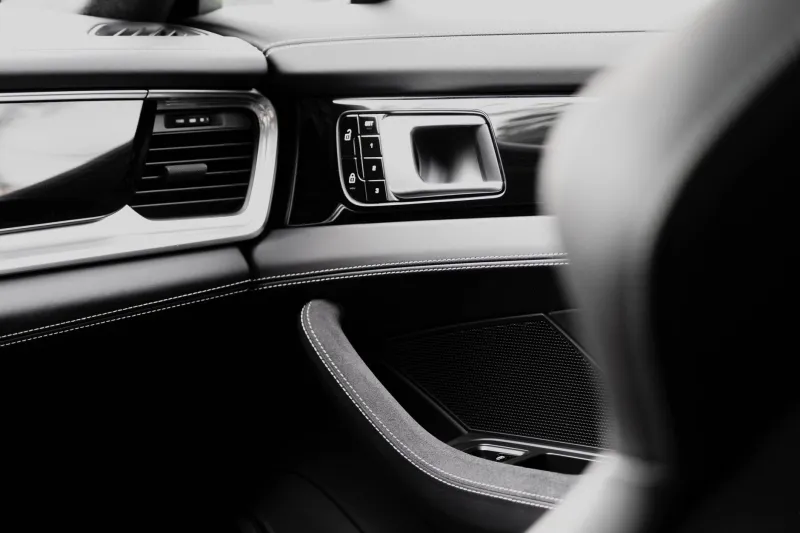
The exceptions, however, are instructive. Porsche has earned considerable credit for retaining physical toggles for its most critical functions, even as it has incorporated a central touchscreen for secondary controls. The GT3's cockpit, in particular, reflects a genuine philosophy: the things a driver touches most often should be reachable without looking, and the things that require a screen should be things that can wait. It is an imperfect compromise, but it is a considered one.
Ferrari's current lineup similarly preserves steering-wheel-mounted controls for the functions most likely to be adjusted mid-corner or mid-straight, reducing the need to break visual contact with the road. The Roma, as a grand tourer, demonstrates that a modern, technologically sophisticated cabin need not sacrifice driver primacy to achieve visual elegance.
Closer to home, the current Cadillac CT5-V Blackwing — one of the most compelling American grand touring arguments in recent memory — offers a center console that still favors physical controls for its most frequently accessed functions. It is not immune to the touchscreen trend, but it has not surrendered entirely to it.
The Deeper Problem: Software as Aesthetic
What makes the trend particularly difficult to arrest is that the touchscreen has become, for many buyers, a proxy for modernity and value. A large, high-resolution display reads as premium in the showroom. It photographs well in marketing materials. It allows manufacturers to demonstrate feature updates without touching the physical car. These are genuine commercial advantages, and they are not going away.
But there is a category error embedded in this logic. The grand tourer is not a smartphone. It is not primarily a device for consuming content or demonstrating connectivity. It is a machine for traveling with purpose and pleasure — for covering ground in a manner that is both efficient and deeply satisfying. The metrics by which a smartphone is judged — screen size, refresh rate, app ecosystem — are almost entirely irrelevant to this purpose.
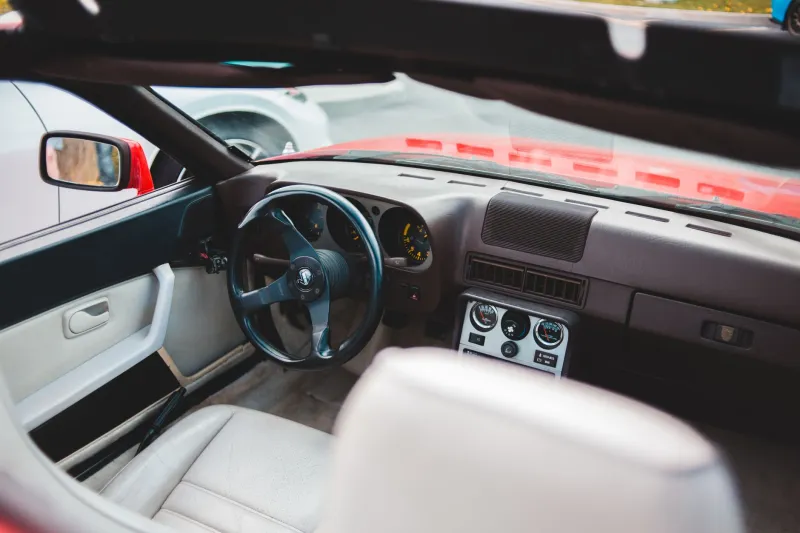
The finest grand touring cabins in history were not celebrated for their technological novelty. The Aston Martin DB series, the Ferrari 250 GT, the early Porsche 911 Targa — these interiors endure in memory because they placed the driver at the center of a coherent, purposeful environment. Every control was where instinct suggested it should be. Every surface communicated something real. The experience of sitting in one was indistinguishable from the experience of being ready to drive.
What the Road Demands
On a genuine grand touring run — say, the Pacific Coast Highway north from Malibu, or a sustained push through the Blue Ridge Parkway — the quality of a car's interface becomes impossible to ignore. The roads demand attention. The miles accumulate. The driver's relationship with the machine either deepens or it doesn't.
In a cabin governed by physical controls, the driver gradually stops thinking about the car's systems and starts simply driving. The temperature is right; the mirrors are set; the suspension mode has been selected. The interface recedes, and the road advances. This is the intended state.
In a cabin governed primarily by software, the opposite tends to occur. The driver becomes a manager of menus, a navigator of nested options, a supplicant to a system that has decided, in its algorithmic wisdom, that the most important thing on the screen right now is a suggestion about a nearby fuel station.
Grand touring has always been about the journey taking precedence. The machine should serve that journey — not interrupt it, not complicate it, and certainly not demand to be managed while it unfolds.
The button, humble as it is, understood this. The touchscreen, for all its luminous promise, has not yet learned the lesson.