Beyond the Hero Run: How a Grand Tourer Reveals Itself Over Three Hundred Miles
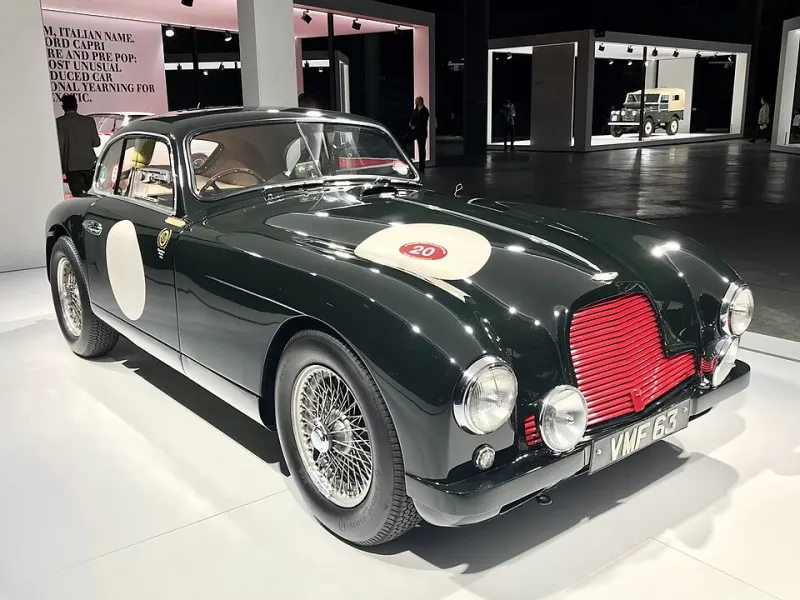
Photo: Ank Kumar, CC BY-SA 4.0, via Wikimedia Commons
A grand tourer can flatter nearly anyone for twenty minutes. The engine is warm, the tires are new to the road, the scenery is unfamiliar, and the driver is occupied with being impressed. Twenty minutes is a demonstration. Three hundred miles is a verdict.
The distinction matters because the modern performance car has become extraordinarily good at the demonstration. Turbochargers spool with almost no lag, adaptive dampers mask a multitude of surface sins, and a well-calibrated eight-speed automatic can make an indifferent driver look tidy. None of that tells you what the car will feel like at the crest of a third mountain pass, or whether your shoulders will ache somewhere east of the Mississippi on the sixth hour of an interstate haul.
The First Mile Is a Performance
Manufacturers engineer for the first mile because that is where impressions are formed. Cold-start sound is tuned. Throttle response is sharpened in the lower gears. The seat is firm and supportive in the way a new mattress is firm and supportive. Everything is at its best because nothing has been asked to repeat itself yet.
The trouble is that grand touring is a repeating endeavor. It is not a sprint followed by a return to the garage. It is hour after hour of steady load, with climbs and descents stacked on top of one another, ambient temperatures that rise through the afternoon, and a cabin that must remain habitable long after the novelty of the route has worn off.
What Heat Soak Actually Does
Heat soak is the accumulation of thermal energy in the engine bay, the brakes, the tires, and the driveline after sustained work. In plain terms, the car gets hot and stays hot. Intake air temperatures climb, which reduces the density of the charge entering the engine. Coolant temperature may rise on a long grade and, more tellingly, may not return quickly to its normal range once the climb ends. Oil temperature is often the truer instrument, because oil absorbs heat from the turbochargers and bearings and releases it slowly.
A well-developed grand tourer manages this with generous cooling capacity, effective heat shielding, and airflow paths that were validated in places far hotter than a dealership test loop. A less developed one reveals itself through rising gauges, a softening throttle, or the faint smell of hot plastic after a hard climb. None of these are catastrophic. All of them are informative.
The Long Pedal: Brake Fade in Plain Terms
Brake fade comes in two distinct forms, and drivers routinely confuse them. Pad fade occurs when the friction material exceeds its operating range; the pedal stays firm and high, but the car simply refuses to slow as expected. Fluid fade occurs when brake fluid absorbs enough heat to boil, introducing gas into the hydraulic circuit; the pedal sinks toward the floor and feels spongy.
Both conditions are cumulative. A single hard stop from highway speed rarely provokes either. A third descent of the same mountain road, with the brakes asked to convert the same energy again and again, will find the limit of whatever fluid and pad compound the car carries. This is why brake fluid with elevated moisture content is such a quiet liability in a vehicle that is driven enthusiastically. The fluid does not fail on the first pass. It fails on the third.
Fatigue Is a Chassis Specification
Comfort degradation is easier to measure than most enthusiasts admit. Seat support is the first casualty. A seat that feels wonderfully bolstered at mile ten can become a instrument of mild torture by hour four if the lumbar curve is wrong for your spine or the cushion is too short for your thighs. Steering wheel reach and the dead pedal matter more on a long drive than the diameter of the front brakes.
Noise fatigue follows closely behind. Tire roar on coarse chip seal, wind noise around the mirror sail, and exhaust drone at a steady 2,200 rpm in top gear all compound over time. A cabin that measures well in a brief test can still wear a driver down across a full day. The relevant question is not how loud the car is, but whether the noise sits in a frequency band that grates.
Chassis composure is the last piece. Secondary ride, body control over crests, crosswind stability, and the accuracy of small steering inputs all declare themselves over distance. A car that feels planted in a corner may still float over expansion joints or require constant correction in a crosswind, and those small corrections accumulate into fatigue.
A Framework for the Third Pass
Judging a grand tourer properly requires a route with repetition built in. The following sequence is a reasonable discipline for an extended test or a borrowed weekend.
- The cold start and first ten miles. Make no judgments. Tires and fluids are cold, and the car is not yet representing itself accurately.
- The first hour at steady state. Note engine and oil temperatures once fully warm. Listen for driveline whine, wind leaks, and tire noise at a genuine highway cruise.
- The third hour. Temperatures should be stable rather than creeping. Check seat comfort, climate control stability, and whether the infotainment has required repeated attention.
- The third pass. Repeat a climb and descent you have already driven. Compare brake pedal height and effort with the first pass. Watch oil temperature at the summit.
- The sixth hour. Conduct a fatigue audit. Are your shoulders tight? Is the seat belt chafing? Has the exhaust note become a nuisance rather than a pleasure?
- The shutdown and walkaround. After the car sits for ten minutes, check for fluid smells, unusually hot wheels, and tire pressures that have climbed far beyond cold specification.
- Write it down. Impressions fade faster than memory suggests. A few notes at the end of the day are worth more than a week of recollection.
What the Sixth Hour Tells You
The best grand tourers are not the ones that feel most spectacular on the way out of the dealership. They are the ones that feel fundamentally unchanged at hour six, still composed, still quiet enough to converse, still willing to brake with authority when the road demands it. That is a harder quality to engineer than acceleration, and a harder one to market. It is also the quality that separates a car built for the brochure from a car built for the map.
A single hero run proves very little. The third pass, and the sixth hour, prove nearly everything.