Born in America: How the C8 Corvette and a New Generation of Domestic Machines Are Claiming the Grand Touring Crown
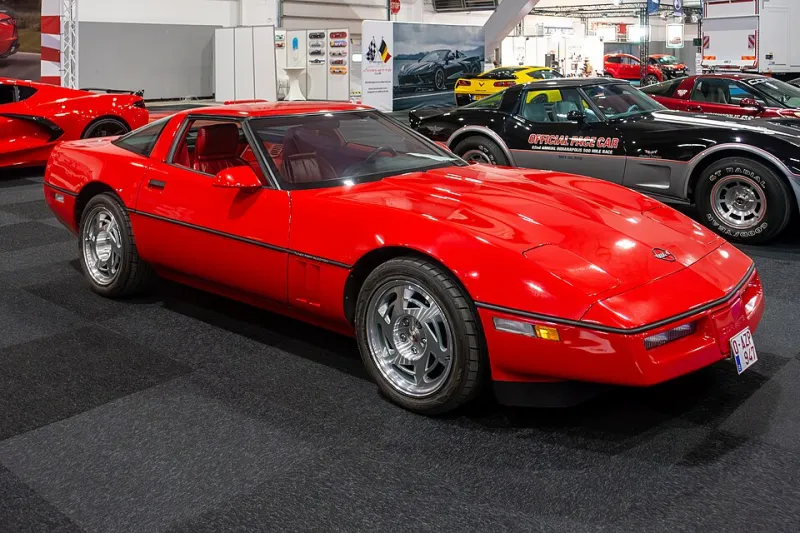
Photo: Matti Blume, CC BY-SA 4.0, via Wikimedia Commons
For the better part of a century, the grand touring automobile was considered a distinctly European invention. Maranello, Stuttgart, and Crewe were the cities that defined the genre — places where craftsmen reconciled blistering performance with the kind of long-distance comfort that allowed a driver to arrive at a Monte Carlo casino feeling composed rather than exhausted. America, the conventional wisdom held, built muscle cars and pickup trucks. It did not build grand tourers.
That conventional wisdom is now obsolete.
A convergence of engineering ambition, manufacturing maturity, and cultural confidence has produced a generation of American performance vehicles capable of competing with — and in certain measurable respects surpassing — their European counterparts. The evidence is not anecdotal. It is documented in lap times, road test scores, and, perhaps most tellingly, in the purchasing decisions of enthusiasts who once reflexively reached for a European brochure.
Redefining the Genre for the American Context
Before examining the vehicles themselves, it is worth considering what grand touring means in 2024. The original European definition emphasized a specific balance: sufficient power to sustain high-speed autobahn or mountain-pass travel, a cabin refined enough to serve as a comfortable environment for extended journeys, and a design language that communicated purpose without sacrificing elegance. Range, refinement, and road presence were the pillars.
The American interpretation has historically skewed toward raw power at the expense of the other two pillars. That imbalance is precisely what the current generation of domestic machines has corrected. Engineers at General Motors, Stellantis, and Cadillac have invested meaningfully in the details that separate a sports car from a grand tourer — adaptive suspension tuning, acoustic isolation, ergonomic seating, and driver-assistance technology that reduces fatigue without diminishing engagement.
The C8 Corvette: A Benchmark Rewritten
No vehicle better illustrates this transformation than the eighth-generation Chevrolet Corvette. When General Motors relocated the engine to a mid-mounted position for the 2020 model year, the decision was understood as a performance statement. What received somewhat less attention was the simultaneous elevation of the interior, the ride quality, and the overall refinement of the package.
The base Stingray's 6.2-liter LT2 V8 produces 495 horsepower in its highest naturally aspirated configuration, while the Z06 variant's flat-plane-crank 5.5-liter LT6 generates 670 horsepower — figures that demand respect in any company. Yet the more consequential achievement may be the manner in which the car delivers those numbers. The eight-speed dual-clutch transmission executes shifts with a smoothness that rivals units found in vehicles costing two to three times as much. The magnetic ride control suspension, now in its fourth generation, reads road surfaces with genuine sophistication, adjusting damping rates in milliseconds to maintain composure across varying pavement conditions.
On a sustained drive from, say, Nashville to the Florida Panhandle — the kind of journey a grand tourer is specifically designed to accommodate — the C8 proves its credentials emphatically. Noise levels at highway speed are competitive with European sports cars in its price class, the seats support the driver through hours of continuous travel, and the available head-up display and driver assistance suite reduce cognitive load without inducing complacency.
At a starting price below $70,000 for the Stingray, the value proposition is, by any objective measure, extraordinary.
Cadillac's Electric Ambition
The Cadillac Lyriq represents a different but equally compelling argument for American grand touring relevance. Positioned as a luxury electric SUV, the Lyriq may not fit the traditional two-door coupe template, but it embodies the genre's spirit in ways that matter to the contemporary enthusiast.
The Lyriq's 33-inch diagonal curved display, AKG audio system, and Super Cruise hands-free driving technology collectively produce an interior environment that is genuinely competitive with the best that BMW and Mercedes-Benz offer at comparable price points. The electric powertrain delivers 340 horsepower and 325 lb-ft of torque in rear-wheel-drive configuration, with a smoothness of power delivery that is inherently well-suited to long-distance travel.
Perhaps more significantly, the Lyriq demonstrates that American luxury brands are willing to invest in the tactile and acoustic details that European manufacturers have long used to justify premium pricing. The door closings are solid. The materials are chosen with evident care. The ambient lighting system creates a cabin atmosphere that rewards extended occupancy. These are not trivial accomplishments for a brand that spent much of the previous decade working to rebuild its luxury credibility.
The Dodge Charger Daytona: Electrifying an Icon
The Dodge Charger Daytona EV occupies a more provocative position in this narrative. Where the Corvette and Lyriq pursue refinement, the Daytona pursues theater — and does so with a conviction that is difficult not to admire. The Fratzonic Chambered Exhaust system, which generates a synthetic soundtrack through a patented resonance chamber, is either a masterstroke of emotional engineering or an elaborate compromise, depending on one's philosophical orientation. Likely it is both.
What is beyond dispute is the performance architecture. The Daytona Banshee's dual-motor all-wheel-drive system is projected to deliver supercar-grade acceleration figures, and the platform's low center of gravity — a natural consequence of floor-mounted battery packaging — promises handling dynamics that the front-engine, rear-wheel-drive Charger of previous generations could not approach.
For the grand touring argument, the Daytona's most relevant attribute may be its range and charging infrastructure compatibility. American road trips require confidence in the refueling network, and Dodge's commitment to broad DC fast-charging compatibility addresses that concern substantively.
The Cultural Shift Beneath the Engineering Story
Beyond specifications and lap times, something more fundamental is occurring in the American performance car landscape. A generation of enthusiasts that grew up admiring European exotics is now approaching the market with a more nuanced and, arguably, more honest perspective. They recognize that the premium attached to a Stuttgart or Maranello badge has not always been commensurate with the engineering advantage it represented. They are asking harder questions about value, reliability, and the actual experience of ownership over time.
The answers those questions are producing increasingly favor domestic alternatives. The C8 Corvette's reliability record, the Cadillac Lyriq's warranty coverage, and the Charger Daytona's dealer network density are practical considerations that matter to drivers who intend to use their vehicles rather than display them.
A New Chapter in a Long Story
The American grand touring renaissance is not a sudden development. It is the product of sustained investment, honest self-assessment, and a willingness by domestic manufacturers to compete on terms historically defined by their European rivals. The C8 Corvette, the Cadillac Lyriq, and the Dodge Charger Daytona are not imitations of European excellence. They are distinctly American expressions of a universal aspiration: the desire to travel quickly, comfortably, and beautifully.
That aspiration has always been as American as the open road itself. The machinery to fulfill it, at long last, is catching up.