The Last Experts: How Independent Grand Tourer Specialists Are Disappearing From the American Landscape
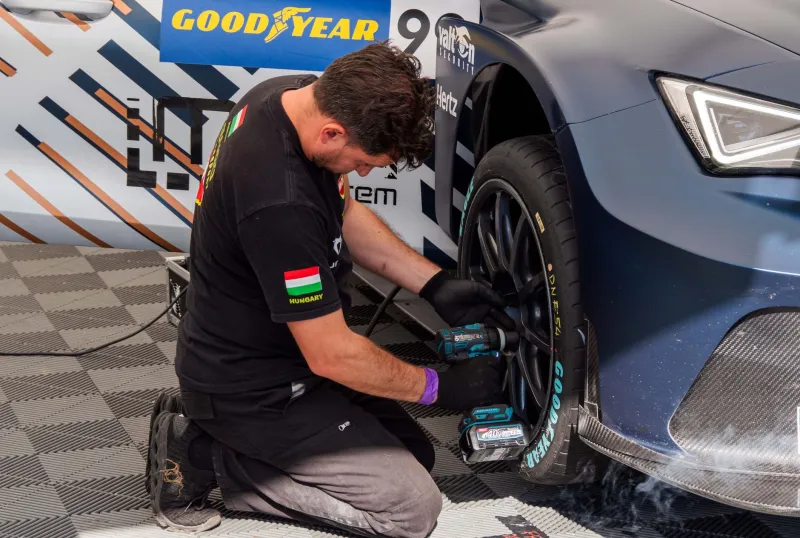
Somewhere in a light-industrial strip on the outskirts of Nashville, behind a door that carries no corporate logo and no manufacturer-approved signage, a man named Robert Hale is performing open-heart surgery on a 2004 Ferrari 575M Maranello. He has been working on Italian grand tourers for thirty-one years. He knows the idiosyncrasies of this particular engine the way a surgeon knows a patient's chart — intimately, historically, personally. When the car's owner brought it to the nearest authorized dealership, he was told a diagnostic appointment would cost $450 before a single wrench was turned. Robert charged him a flat labor rate and solved the problem in an afternoon.
Robert Hale is, by every meaningful measure, irreplaceable. He is also, by every observable trend, endangered.
The Consolidation Tide
The American automotive retail landscape has been contracting for years, but the pace has accelerated sharply in the post-pandemic era. Large dealer groups — publicly traded conglomerates operating dozens or hundreds of franchises — have absorbed independent operations at a rate that would have seemed implausible a decade ago. According to data published by the National Automobile Dealers Association, the total number of franchised dealerships in the United States has declined by more than thirty percent since the year 2000. The survivors tend to be larger, more capitalized, and more rigidly process-oriented than the shops they replaced.
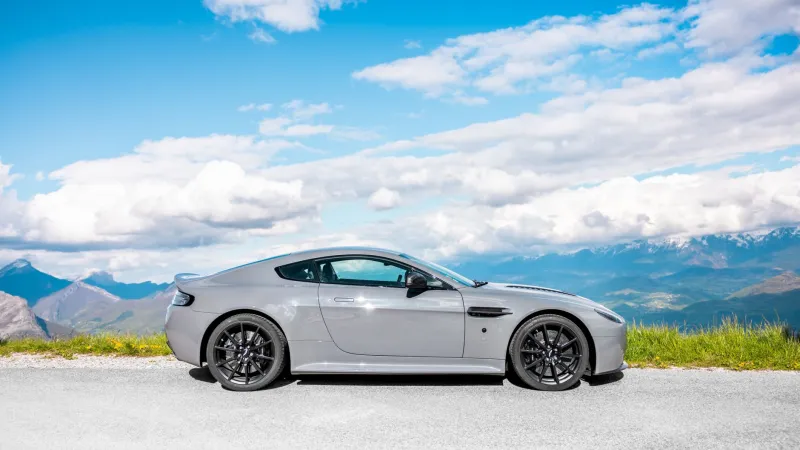
For owners of mainstream vehicles, this consolidation is largely a matter of inconvenience — longer wait times, higher labor rates, service advisors reading from scripts rather than speaking from experience. For owners of grand touring vehicles, the consequences are considerably more serious. A Bentley Continental GT, a Porsche 911 Turbo S, an Aston Martin DB11 — these are machines of extraordinary mechanical complexity, built to exacting tolerances, and deeply sensitive to the quality of care they receive. The difference between a technician who genuinely understands the vehicle and one who is following a manufacturer's diagnostic flowchart is not merely a matter of pride. It is, over time, a matter of the car's survival.
What Is Actually Being Lost
The expertise concentrated inside independent grand tourer specialists is not the kind of knowledge that transfers easily. It accumulates over careers spent with specific platforms, specific engines, specific electrical architectures. A technician who has rebuilt fifty Porsche M96 engines knows things about that unit — its failure modes, its tolerances, its particular vulnerabilities — that no factory training course can convey. When that technician retires or closes his shop because he cannot compete with the marketing budgets and loaner-car fleets of a regional dealer group, that knowledge does not migrate to the conglomerate down the road. It simply ceases to exist in any accessible form.
The implications for preservation are profound. Grand touring vehicles are, at their finest, objects of genuine cultural significance — rolling expressions of engineering philosophy, design ambition, and performance capability at their historical moment. The Jaguar XKE, the BMW 8 Series, the original Acura NSX: these machines are worth preserving not merely as financial assets but as artifacts. Preserving them requires people who understand them at a depth that transcends the service bulletin.
"What I do isn't just maintenance," says Elena Vargas, who operates a specialist workshop in Scottsdale focused on German grand tourers. "It's custodianship. These cars have histories. They have owners who loved them. When I work on one, I'm responsible to everyone who drove it before."
That sense of responsibility — that orientation toward the machine as something worth honoring — is precisely what tends to be absent in the high-volume service environment of a consolidated dealership.
The Owner-Mechanic as Last Resort
Facing a service landscape that offers either inadequate expertise or prohibitive cost, a growing number of grand tourer owners are doing something that would have seemed improbable in earlier eras: they are learning to maintain their own machines. Online communities dedicated to specific platforms — the Porsche 996 forums, the Ferrari owners' clubs, the Aston Martin enthusiast boards — have become informal technical universities, repositories of diagnostic wisdom accumulated by passionate amateurs who had no alternative but to learn.
This is admirable in its way. The depth of knowledge available on some of these platforms rivals anything a factory training program offers. But it is also a symptom of institutional failure. Owners should not be required to become engineers to keep their vehicles in proper condition. And for all the value of community knowledge, there remains irreplaceable value in the hands of someone who has physically encountered a problem dozens of times, who can hear a misfire and identify its cause before the car is even on the lift.
The owner-mechanic trend also introduces real risk. Grand touring vehicles are not forgiving of well-intentioned but imprecise work. The consequences of an error on a high-performance braking system or a complex active suspension are categorically different from the consequences of an error on a family sedan. Enthusiasm, however genuine, is not a substitute for experience.
The Path Forward
There are reasons for measured optimism. In certain markets — Los Angeles, Miami, the New York metropolitan area, Chicago — independent specialist culture remains relatively robust, sustained by concentrations of serious collectors who generate sufficient demand to support small, expert operations. Apprenticeship programs, some of them informal and organized through enthusiast networks, are beginning to emerge as a mechanism for transferring specialist knowledge to a younger generation.
The marque clubs deserve particular recognition here. Organizations like the Porsche Club of America, the Ferrari Club of America, and the Jaguar Clubs of North America have increasingly recognized their role not merely as social organizations but as custodians of technical knowledge. Some chapters have begun hosting technical seminars led by independent specialists — events that serve both as educational resources and as economic lifelines for the shops involved.
But these are partial solutions to a structural problem. The economics of automotive retail continue to favor scale over depth, throughput over expertise, standardization over judgment. Without a deliberate effort by the enthusiast community — through patronage of independent specialists, through advocacy within marque organizations, through the simple act of choosing expertise over convenience — the Robert Hales and Elena Vargases of American grand touring will continue to disappear.
The machines they serve deserve better. So do the owners who love those machines. And so does the broader culture of automotive passion that depends, more than it perhaps realizes, on the people willing to dedicate their professional lives to understanding a single car, a single engine, a single era of engineering ambition, with the depth and devotion those subjects genuinely warrant.