Full-Time Fervor: The Case for Making Your Grand Tourer an Everyday Companion

Photo by Photo by Yannic Alexander on Unsplash on Unsplash
There exists, in the mind of the modern automotive enthusiast, a kind of self-imposed rationing. The sports car stays garaged through the work week, preserved for Saturday morning canyon runs or the occasional track day. Monday through Friday belongs to the sensible sedan, the crossover, the vehicle that neither embarrasses nor excites. It is an arrangement born of practicality—or so the reasoning goes.
But a vocal and increasingly visible segment of the grand touring community has arrived at a different conclusion: that compartmentalizing your automotive life is not a practical necessity, but rather a failure of conviction. These are the enthusiasts who pilot a Porsche 911 through rush-hour traffic, who park a BMW M440i in a downtown garage five days a week, who trust a Lotus Emira to deliver them reliably to a Monday morning meeting. And overwhelmingly, they will tell you they would have it no other way.
The Myth of the Fragile Performance Machine
The resistance to daily-driving a grand tourer often stems from an outdated assumption: that high-performance automobiles are inherently temperamental, expensive to maintain in regular use, and poorly suited to the indignities of urban commuting. This perception has roots in an earlier era, when exotic machinery genuinely demanded special handling and frequent mechanical attention.
Contemporary grand tourers, however, are engineered to an entirely different standard. The current Porsche 911 Carrera, for instance, is a vehicle that Porsche's own engineers use as personal daily transportation. Its horizontally opposed six-cylinder engine is calibrated to tolerate stop-and-go traffic without complaint, its dual-clutch transmission manages urban crawl with the patience of a luxury saloon, and its reliability record is, by any objective measure, exemplary. The BMW M440i Gran Coupe adds four doors and a rear seat to its M Performance equation without meaningfully diluting the driving experience—and its turbocharged inline-six is famously long-lived under regular use.
Even the Lotus Emira, a car that wears its driver-focused intentions openly, has been engineered with a level of daily usability that would have seemed implausible from Hethel a decade ago. Climate control, a comprehensible infotainment interface, and a trunk that can accommodate an overnight bag are not afterthoughts on the Emira; they are deliberate design commitments.
Living With It: The Honest Accounting
To be clear, daily-driving a grand tourer is not without its considerations. Insurance premiums will be higher than those on a conventional vehicle. Tire wear, particularly on performance-compound rubber, accelerates when the car is used for the full spectrum of driving conditions. Premium fuel is not optional. And the emotional calculus of parking a cherished machine in an urban environment introduces a low-grade anxiety that owners of lesser vehicles never experience.
James Whitfield, a Chicago-based architect who has driven his Porsche 911 Targa 4S as his sole vehicle for three years, acknowledges these realities without apology. "The insurance is real, the tire bills are real," he says. "But I did the math on what I was spending to maintain a second car—the depreciation, the insurance, the registration—and the numbers were closer than I expected. And I was only enjoying one of those two cars."
His observation speaks to a broader truth about the dual-car arrangement that so many enthusiasts maintain: the commuter car is not free. It carries its own financial weight, and that weight subsidizes a separation of experience that may not, on reflection, be as necessary as assumed.
Sarah Okonkwo, a Houston-based attorney who daily-drives a BMW M440i Gran Coupe, describes a different kind of arithmetic. "Every morning, I walk to a car that I genuinely want to drive," she says. "That feeling does not get old. After two years, I still look forward to the commute in a way that I never did in any other car I've owned."
The Grand Touring Philosophy, Applied
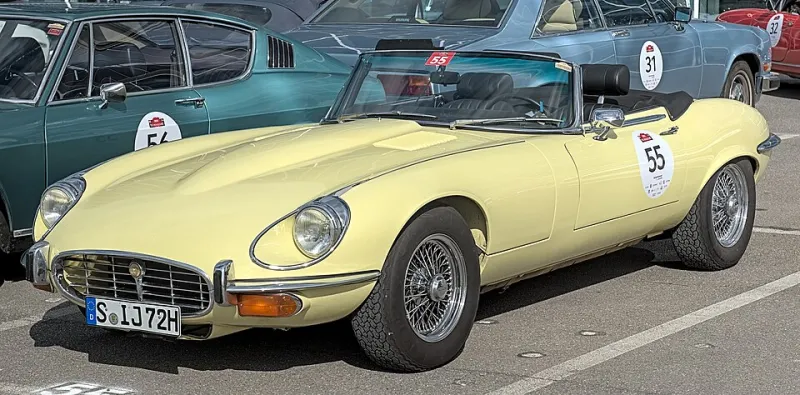
The grand tourer as a concept was never intended to be a weekend novelty. The original grand touring machines—the long-distance express coupes that emerged from postwar European coachbuilding—were designed to cover serious distances in serious comfort, to be trusted with important journeys. The Ferrari 250 GT, the Aston Martin DB series, the early Porsche 911: these were not track day toys. They were instruments of purposeful travel.
Applying that philosophy to contemporary American life means reconsidering what purposeful travel looks like. It is the 34-mile freeway commute across the Los Angeles basin, where the M440i's adaptive suspension transforms broken pavement from an ordeal into a minor inconvenience. It is the Friday afternoon escape from Washington, D.C., toward the Shenandoah Valley, where the 911's chassis communicates every nuance of the road through the steering column. It is the Emira threading through Atlanta's Midtown grid on a Tuesday morning, its mid-mounted engine note a private pleasure shared with no one.
Maintenance Realities and the Long View
The practical enthusiast planning to daily-drive a grand tourer should approach maintenance with the same seriousness they bring to the driving experience. Service intervals should be observed without compromise. Fluids—particularly brake fluid and transmission oil—deserve attention more frequently than manufacturer minimums when the car is in constant use. A relationship with a qualified independent specialist, rather than exclusive reliance on a dealership service department, can meaningfully reduce long-term costs while ensuring the vehicle receives knowledgeable attention.
The reward for this diligence is an intimacy with the machine that weekend drivers rarely achieve. When you drive the same car every day, you learn its language with a fluency that occasional use cannot produce. You notice the subtle shift in steering feel that precedes a tire reaching its wear limit. You understand, intuitively, exactly how the engine responds in cold weather versus warm. The car becomes an extension of your senses rather than an object of occasional admiration.
The One-Car Life
For those willing to commit fully, the single-vehicle grand touring lifestyle offers a clarity that the divided garage cannot match. Your resources—financial, attentional, emotional—concentrate on one machine. You maintain it more carefully because it is your only transportation. You drive it more confidently because it is familiar territory.
This is not a choice for everyone. Families with children, those who live in climates where winter driving demands a dedicated snow vehicle, and those whose professional obligations require genuine cargo capacity will find the compromises too significant. The grand touring daily driver is, ultimately, a lifestyle choice as much as an automotive one.
But for the enthusiast who can make it work, the rewards are considerable and cumulative. The grand tourer was always meant to be lived with, not saved for. The road does not become less interesting on a Wednesday. The machine does not become less capable between Monday and Friday. The only question is whether you are willing to stop rationing the experience—and start living it in full.