The Calculated Garage: Building a Grand Tourer Collection Without Breaking the Bank

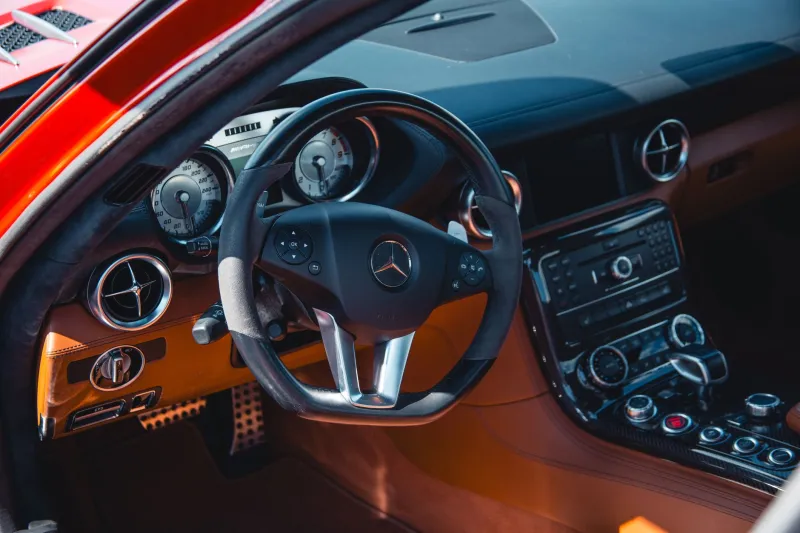
Photo: Murcie13, CC BY-SA 3.0, via Wikimedia Commons
Let us dispense with the comfortable fiction first: owning a grand tourer—let alone a collection of them—is not inexpensive. Anyone who tells you otherwise is either deeply fortunate, deeply in denial, or has not yet received their first major service invoice. The costs are real, they are recurring, and they have a tendency to arrive in clusters at the least convenient moments.
And yet, across the American enthusiast community, a distinct and growing cohort of collectors has demonstrated that the multi-car grand touring garage is achievable at income levels well below those of the traditional luxury automotive market. They have done so not through financial magic but through the application of something more durable: rigorous thinking, strategic patience, and an honest relationship with the full economics of the hobby.
This is what that thinking looks like in practice.
The True Cost of Ownership: A Reckoning
The purchase price of any grand tourer is, in financial terms, merely the entry fee. The ongoing costs—predictable and otherwise—are where collections succeed or fail.
Insurance deserves the first serious examination. A performance-oriented vehicle with a declared value above $60,000 will carry annual premiums that can range from $1,800 to well over $4,000 depending on the owner's age, location, driving record, and the specific insurer's appetite for the marque in question. Agreed-value policies, which protect the collector against depreciation-adjusted payouts in the event of a total loss, are strongly advisable for appreciating or stable-value vehicles but carry their own premium implications.
Maintenance is the variable that most underestimated buyers encounter with the greatest shock. A Porsche 911 of the 996 or 997 generation—among the most accessible entry points into the Zuffenhausen lineage—carries routine service costs that are manageable but unforgiving of neglect. Major services involving inspection of the intermediate shaft bearing (a known vulnerability in earlier 996 engines), clutch replacement, or cooling system overhaul can individually approach or exceed $3,000 even at independent specialist shops. A used Maserati or Jaguar of comparable vintage can double that figure without difficulty.
Storage is the cost that surprises collectors who live in climates—the upper Midwest, the Mountain West, much of New England—where seasonal storage is not optional. A climate-controlled storage unit of appropriate size runs between $150 and $400 per month in most American markets. Multiply that across a two- or three-car collection and the annual figure becomes a meaningful line item in any honest budget.
Strategic Acquisition: The Timing Advantage
The collectors who build exceptional garages on measured budgets share one consistent habit: they buy deliberately, and they buy when the market is not watching.
Depreciation curves for grand tourers are neither uniform nor always rational. Certain models experience their steepest value declines in the three to seven years following initial release, as lease returns and early adopters' trade-ins flood the used market simultaneously. This window—well-documented for vehicles like the BMW 6 Series, the Mercedes-Benz SL-Class, and the Jaguar F-Type coupe—represents the most favorable acquisition moment for the budget-conscious collector.
Mark Hessler, a Denver-based financial analyst who has assembled a three-car garage over the past decade on an annual automotive budget he describes as "aggressively middle-class," acquired his 2012 Aston Martin V8 Vantage in 2019 at a price that would have seemed improbable at the car's original launch. "I watched that car for two years," he explains. "I tracked every comparable sale I could find. When a clean example with documented service history appeared at the right number, I was ready to move immediately."
His approach illustrates a principle that experienced collectors articulate consistently: preparation precedes opportunity. The collector who has done the research, established their financing, and identified their acceptable parameters before a target vehicle appears will always outperform the one reacting to a listing in real time.
The DIY Dividend
Perhaps the most significant financial lever available to the mid-level enthusiast is the willingness to perform a meaningful portion of routine maintenance personally. This is not a universal prescription—certain marques, and certain systems within any marque, genuinely require specialized tooling and expertise that no reasonable amateur should attempt to replicate. But the range of tasks accessible to a mechanically literate owner is broader than the dealership service model would prefer you to believe.
Oil and filter changes, brake fluid flushes, air filter replacements, and detailing that preserves paint and interior surfaces against the deterioration that inflates reconditioning costs—these are tasks that the engaged enthusiast can execute competently with modest investment in quality tools and manufacturer-specification fluids. On a vehicle that requires premium synthetic oil and sees two to three oil changes annually, the cumulative saving over a five-year ownership period is not trivial.
Susan Park, a Portland-based architect and owner of a 2008 BMW M6 coupe and a 2003 Porsche 911 Carrera 4S, estimates that her willingness to perform basic maintenance tasks herself reduces her annual per-car service costs by approximately 30 percent. "I am not rebuilding engines," she is careful to note. "But I know these cars well enough to catch things early, and I know which independent specialists to trust for the work I cannot do myself. That combination matters enormously."
The Strategic Sourcing Playbook
Beyond timing the market and managing maintenance costs, the most consistently successful budget collectors are disciplined about where they source their vehicles.
Certified pre-owned programs from manufacturer franchises offer warranty coverage that has genuine value for high-risk components, but they price that coverage into the purchase figure. For vehicles beyond the CPO eligibility window, independent specialist dealers—those who focus exclusively on specific marques or eras—frequently offer more honest condition assessments and more competitive pricing than generalist used-car operations, because their reputational capital depends on the accuracy of their representations.
Private party acquisitions from documented single-owner histories remain the highest-reward, highest-research-demand channel. The collector community's informal networks—marque-specific clubs, regional concours events, online forums with established membership reputations—surface private sale opportunities that never reach public listing platforms. Investing in these communities pays dividends that extend well beyond the social dimension.
Building the Garage Sequentially
The practical reality of budget-conscious collection building is that it proceeds one car at a time, with each acquisition informed by the lessons of its predecessor.
The most common error among enthusiasts entering the multi-car ownership tier is attempting to build too quickly. A garage assembled in haste tends to contain at least one vehicle acquired emotionally rather than analytically—a car that looked right on a Saturday afternoon and revealed its deferred maintenance and hidden costs on the first Monday morning.
The collectors who build lasting garages do so with a clear hierarchy: one primary vehicle that is fully sorted and financially stable before the second acquisition is seriously considered. The emotional discipline this requires is not glamorous, but its results are evident in every well-maintained three-car garage that did not begin with a trust fund.
The Long View
Grand touring, at its most honest, is a long-term commitment. The machines that reward the deepest engagement are not those acquired impulsively and sold when the novelty fades, but those understood thoroughly, maintained faithfully, and driven with the intentionality that the discipline demands.
The budget-conscious collector who approaches the economics of the hobby with the same seriousness they bring to the road itself will find that the financial constraints, properly managed, impose a useful discipline. They force prioritization. They reward research. And they ensure that every vehicle in the garage earned its place there—which is, ultimately, the foundation of a collection worth having.